
18 Steps to Avoid SEO Scams as a Lawyer and Tips for Knowing the Right Marketing Agency.
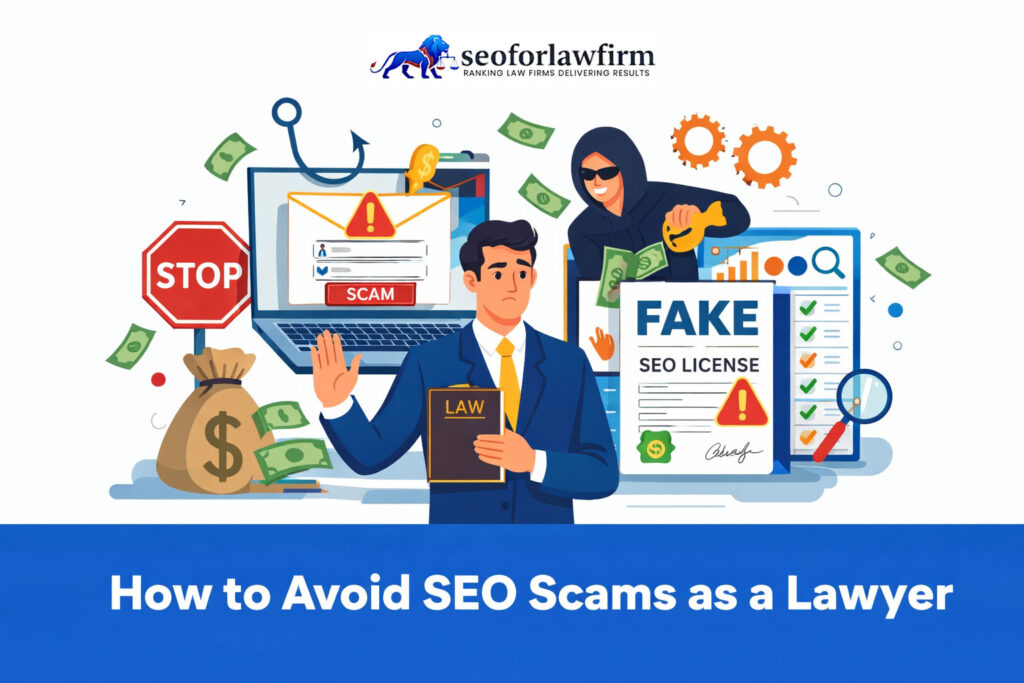
Lawyers avoid SEO scams by rejecting guaranteed rankings, hidden tactics, and vague deliverables. Lawyers should retain ownership of digital assets, verify legal-industry experience and references, and measure SEO through qualified leads, consultations, and retained matters. Google explicitly states that no SEO provider can guarantee a #1 ranking and warns businesses about agencies that claim special […]
Law Firm SEO Audit: On-Page, Technical, Local, and Off-Site

A law firm SEO audit is a structured evaluation of the website, Google Business Profile, legal content, local citations, reviews, backlinks, technical infrastructure, and client-intake tracking that influence search visibility. The audit identifies the problems preventing practice-area and location pages from appearing for searches such as “personal injury lawyer in Dallas,” “criminal defense attorney near […]
On-Page vs. Off-Page SEO for Law Firms: Differences, Signals, Mistakes, and ROI
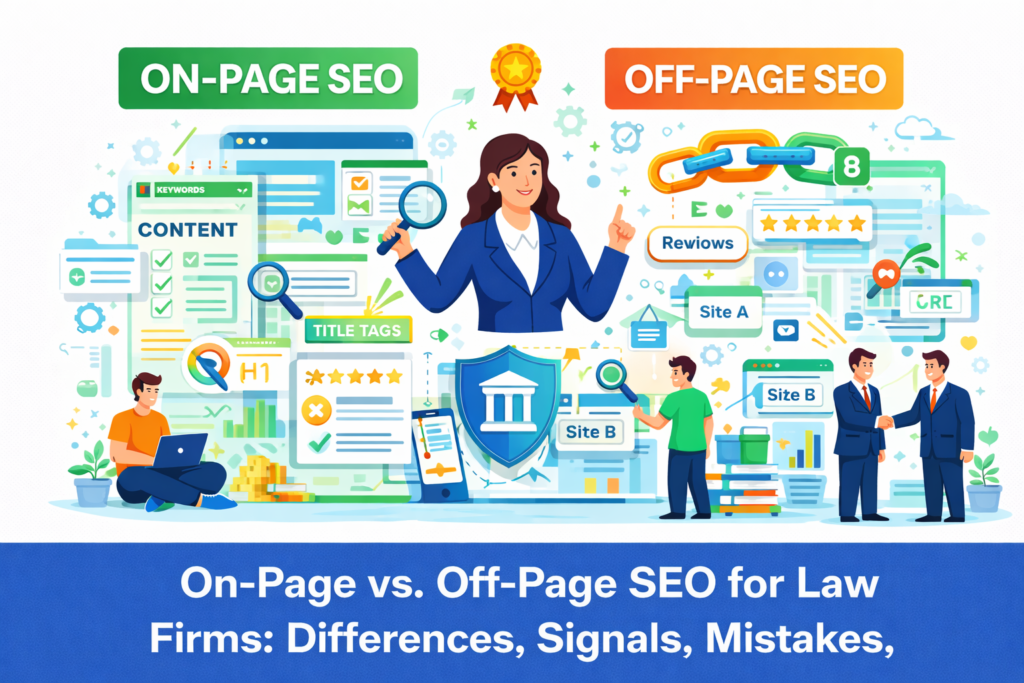
On-page SEO improves the content, structure, and HTML elements located on a law firm’s website, whereas off-page SEO builds external authority through backlinks, reviews, legal-directory citations, Google Business Profile, media references, and professional relationships. Law firms need both because on-page SEO establishes relevance for a legal search and off-page SEO supplies independent evidence that the […]
Black Hat SEO Tactics Lawyers Must Avoid: Risks, Penalties, and Ethics
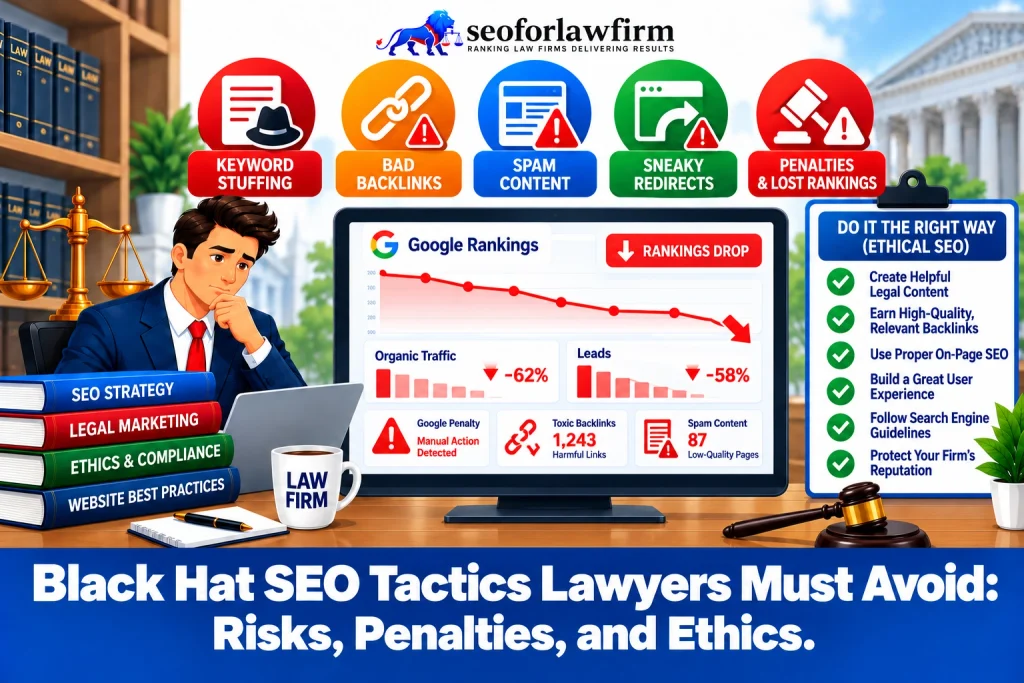
Black hat SEO for law firms involves deceptive or manipulative practices designed primarily to influence search rankings rather than provide useful information or a legitimate user experience. Google’s current spam policies prohibit practices such as keyword stuffing, link spam, cloaking, hidden text or links, doorway abuse, sneaky redirects, expired domain abuse, and scaled content created […]
Google’s 2026 SEO Update: What Law Firms Must Change
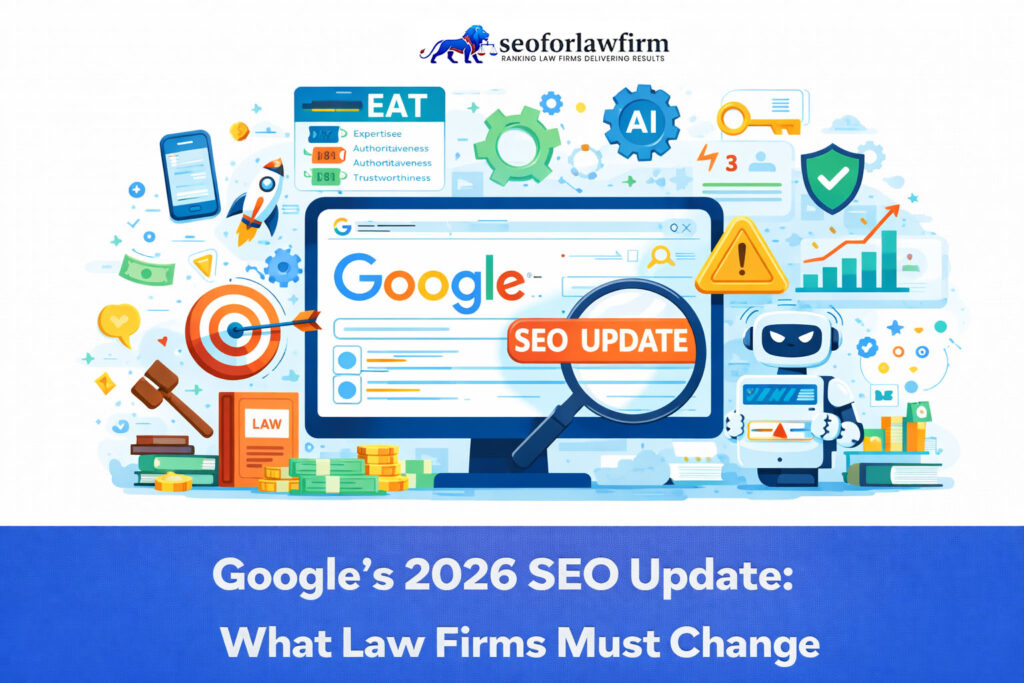
Google’s major 2026 SEO changes include the March and May core updates and the March and June spam updates. The changes also include the February Discover core update and the removal of FAQ rich results. Google also introduced new generative-AI optimization guidance and new Search Console reporting for AI Overviews and AI Mode. Google released […]
Google Ranking Fluctuations For Law Firms: Causes, Monitoring, and Recovery
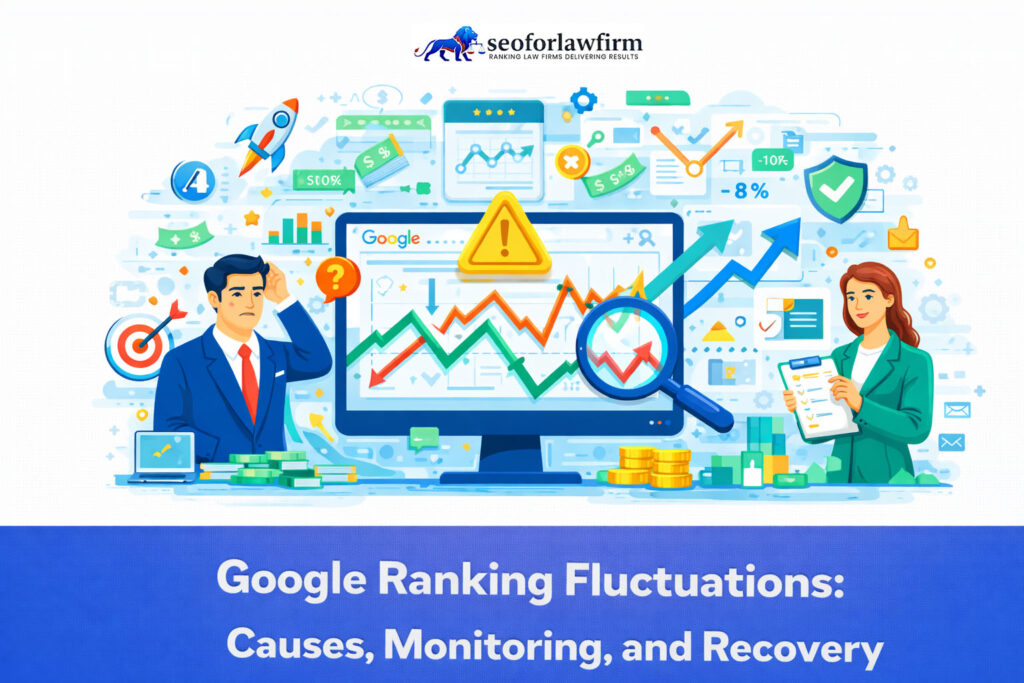
Google ranking fluctuations for law firms are changes in organic, local, and AI-search visibility. Google ranking fluctuations are caused by Google ranking-system updates, technical or indexing problems, local-search conditions, website changes, competitor improvements, changing search demand, and changes to the composition of Google search results. Many legal topics involve decisions that affect a person’s finances, […]
Law Firm Logos: Branding, Design, and Marketing

A great law firm logo is a clean, distinctive, and professional visual signature that helps clients recognize the firm across websites, search profiles, social media, business cards, office signage, and other marketing materials. Typography determines how clearly the firm name is presented. Serif typefaces often support a traditional legal identity, while modern sans-serif typefaces support […]
Digital Marketing for Lawyers: SEO, PPC, and Social Media
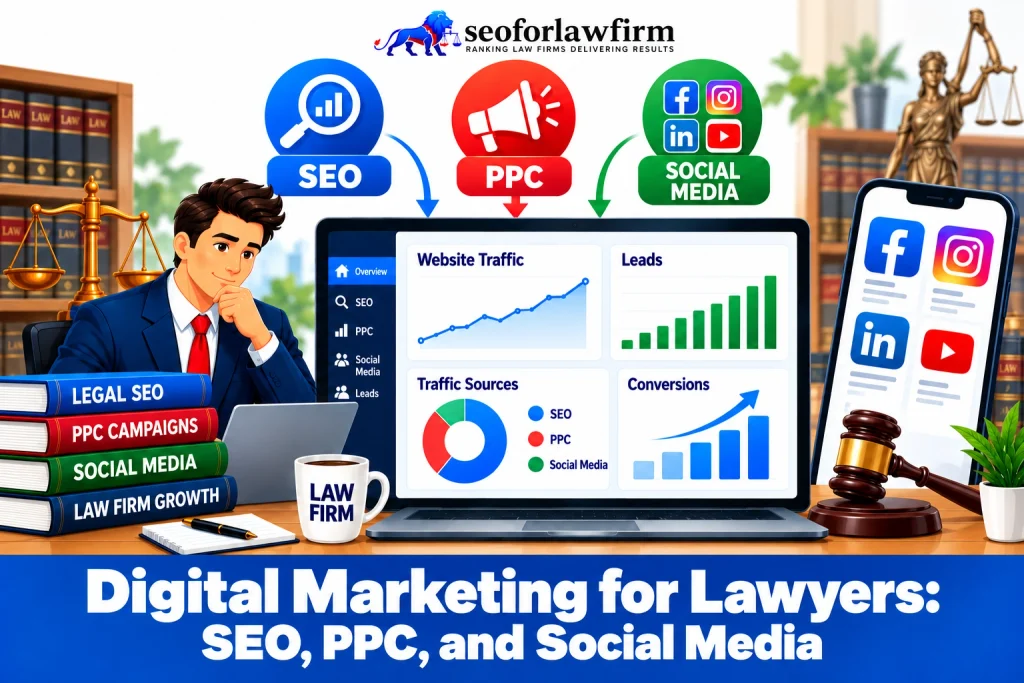
Digital marketing for lawyers uses online channels to reach prospective clients and generate qualified enquiries. Digital marketing includes local SEO, Google Business Profile, Local Services Ads, PPC, content marketing, search, social media, and conversion tracking. Local SEO connects law firms with people searching for nearby legal services through Google Search, Google Maps, and Google Business […]
How to Define Your Legal Audience? Personas, ICPs, and Messaging

Defining your legal audience means identifying the specific people or organizations that need your legal services. It also means understanding their legal problems, questions, decision criteria, referral paths, and preferred communication channels. Law firms should begin with existing clients rather than invented demographic profiles. Past case files, CRM records, intake calls, consultations, signed matters, declined […]
Niche Legal Marketing for Attorneys: SEO, Ads, and Channels
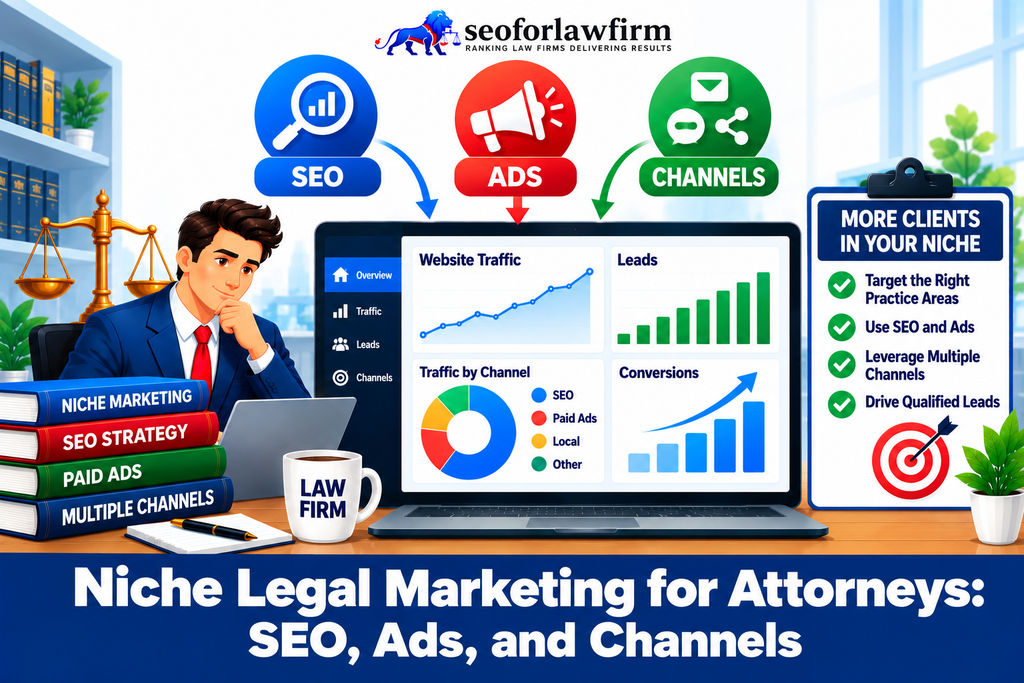
Niche legal marketing for attorneys focuses a law firm’s marketing on a specific practice area, legal problem, client type, or industry so its website, advertising, content, and referral activity speak directly to the people most likely to need that form of representation. A niche can focus on a practice area such as immigration or estate […]