
Long-Tail Keywords for Law Firms: Targeting, Ranking, and Conversions
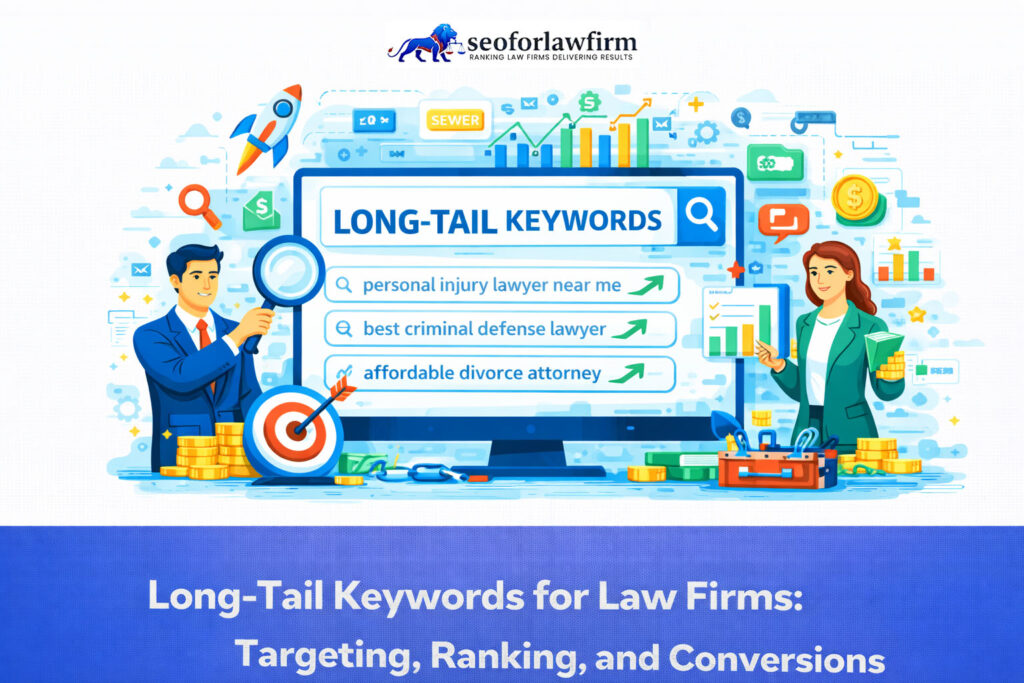
Long-tail keywords for law firms are specific search phrases that express a narrow legal problem, service need, circumstance, or geographic intent, such as “how to modify child custody after job loss in Kansas” or “what to do after a commercial truck accident.” Long-tail keywords are multi-word phrases, but word count alone does not define a […]
Google Helpful Content Update for Law Firms: Signals, Fixes, and Recovery
Google’s Helpful Content Update affects law firm SEO through Google’s current core ranking systems, which prioritize helpful, reliable, people-first content rather than content created primarily to attract search traffic. Google retired the standalone helpful content system after integrating its helpfulness assessment into its core ranking systems in March 2024. Original legal insight gives a law […]
How to Fix Google Indexing for Law Firms? (10 Steps)
To fix Google indexing issues for a law firm website, inspect affected URLs in Google Search Console, confirm Googlebot access, remove accidental noindex directives, review robots.txt, and monitor the Page Indexing report until Google processes the changes. Start with Google Search Console rather than guessing why a practice-area page or location page disappeared. The Page […]
Internal Linking for Law Firms: Hubs, Anchors, and Equity Flow
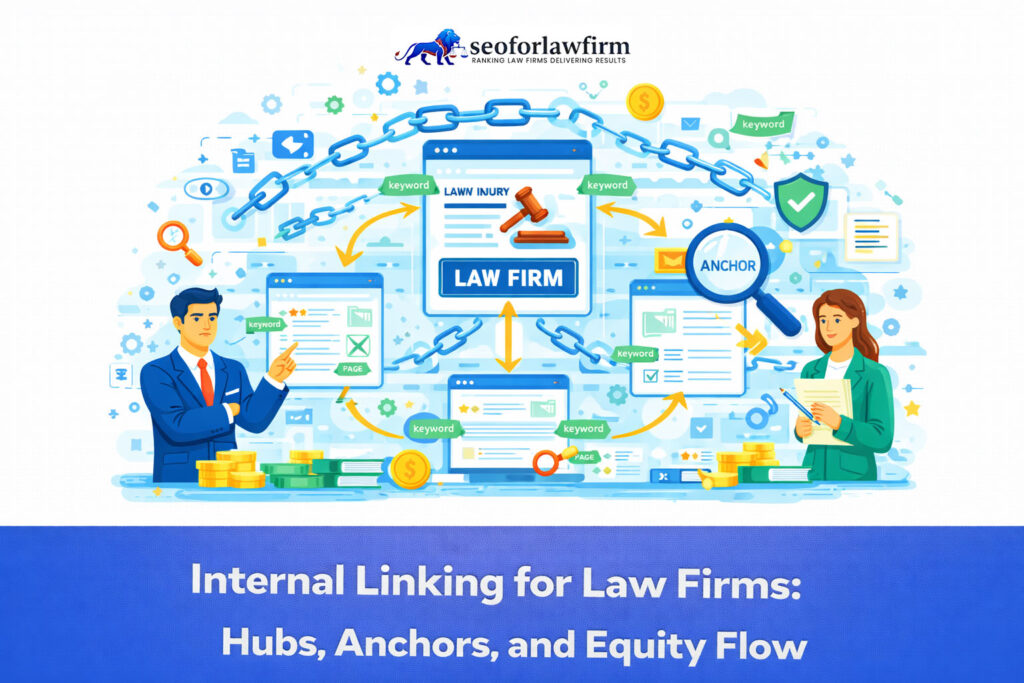
Internal linking for law firms is the practice of connecting related pages on the same legal website. These internal links help users and search engines move between practice areas, legal guides, location pages, attorney profiles, and conversion pages. Internal links help Google discover pages through crawlable links and understand relationships between pages. Google’s current guidance […]
Mobile SEO for Lawyers: Rankings, UX, and Speed
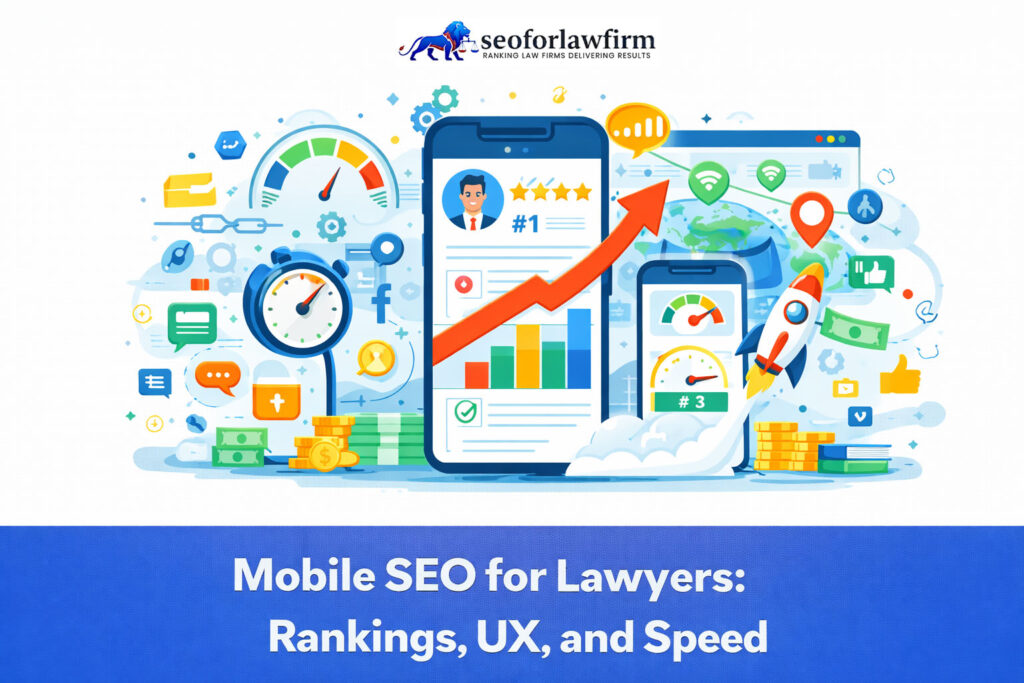
Mobile SEO for lawyers means optimizing a law firm website for Google’s mobile-first indexing system, fast mobile performance, easy client contact, and local legal searches performed from smartphones. Google uses the mobile version of a website’s content for indexing and ranking, which makes the mobile page the primary search version Google evaluates. Responsive design gives […]
Why Do Local Listings Matter for Law Firm SEO? Rankings, Maps, and Visibility
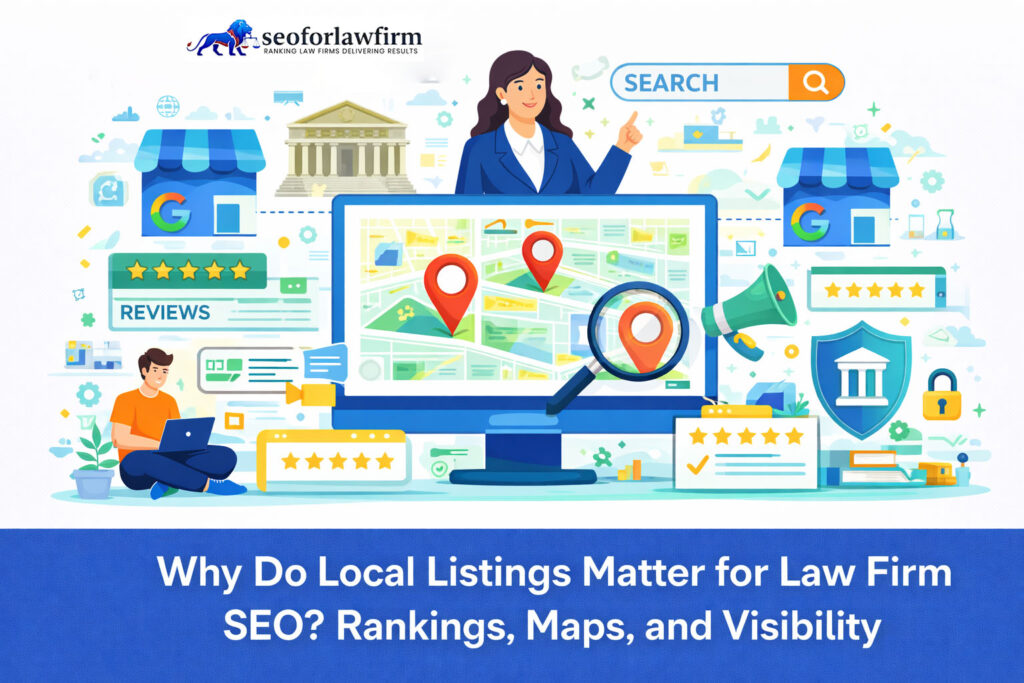
Local business listings matter for law firm SEO because they give Google and prospective clients accurate business information. Local business listings include the firm’s name, address, phone number, website, hours, services, and physical locations across established platforms. Google Business Profile is the most direct local listing for Google Search and Maps. Complete and accurate profile […]
PPC for Lawyers: Budgets, Bidding, and Lead Generation
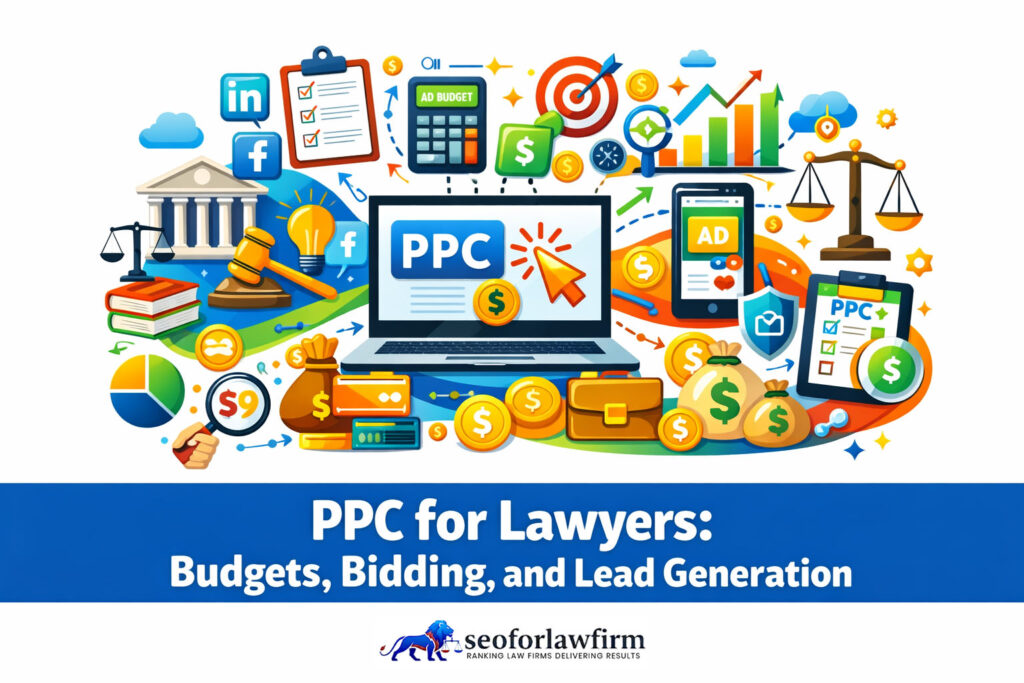
Pay-per-click (PPC) for lawyers is a paid digital advertising model where law firms pay when a user clicks an advertisement, primarily through search platforms such as Google Ads and Microsoft Advertising. PPC gives law firms immediate search visibility for high-intent queries from people actively looking for legal representation, including searches such as “car accident lawyer […]
Law Firm Marketing Budgets: SEO, PPC, and Local Ads
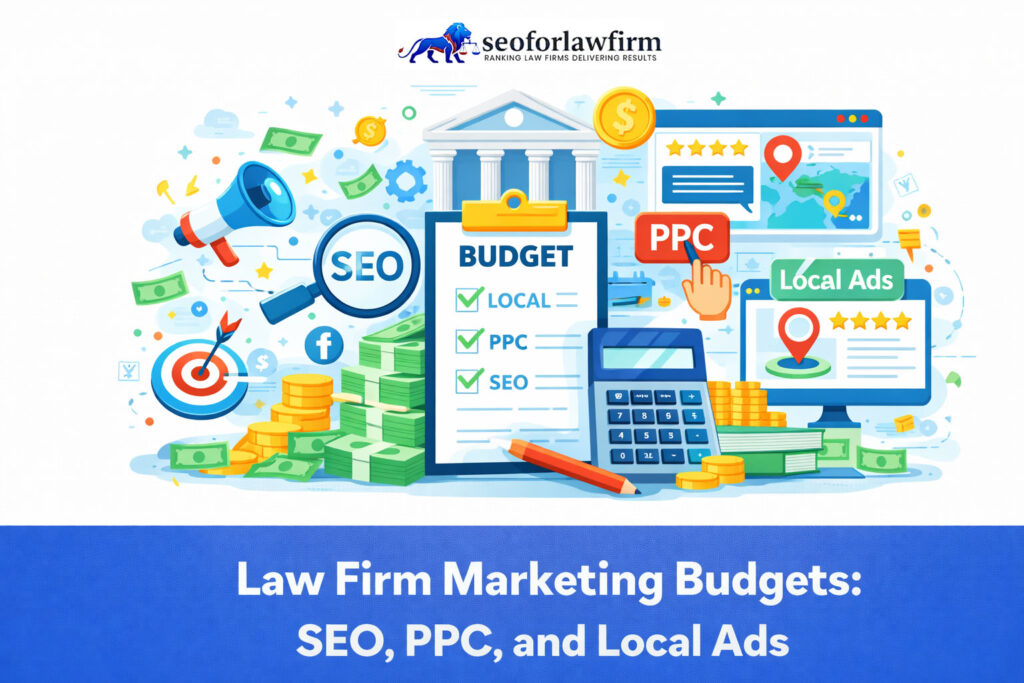
Law firms commonly use 2%–15% of gross revenue as a practical marketing-budget range, with 5%–10% serving as a useful starting range for firms pursuing steady growth. Clio cites 2%–5% guidance from law firm management consultants and 7%–8% guidance attributed to the U.S. Small Business Administration, whereas the American Bar Association gives 5%–10% of annual revenue […]
How to Market Yourself as a Lawyer? (17 Steps)

To market yourself as a lawyer, define your ideal client, choose a clear practice niche, build a recognizable personal brand, establish a professional digital presence, share useful legal knowledge, develop referral relationships, network within relevant professional communities, and deliver a client experience that earns recommendations. Your ideal client defines the people, businesses, industries, legal problems, […]
YouTube Marketing for Lawyers: SEO, Leads, and Engagement

YouTube marketing for lawyers uses educational legal videos to build prospective-client trust, answer common legal questions, generate inquiries, and increase visibility across YouTube Search and eligible Google video results. YouTube Search evaluates relevance, engagement, and quality, including how closely the video content, title, description, and other metadata match the viewer’s query. Successful law firm channels […]