
Conversion Rate Optimization for Law Firms: Turn Visitors Into Clients
Turn Existing Website Traffic Into More Calls, Forms & Consultations
SEOForLawFirm improves the pages, forms, calls to action, mobile journeys, trust signals, and intake paths that determine whether a legal website visitor becomes a qualified lead.
Behavioral analytics, UX testing, conversion copy, mobile optimization, intake alignment, and A/B testing work together to increase the value of traffic your firm already receives.
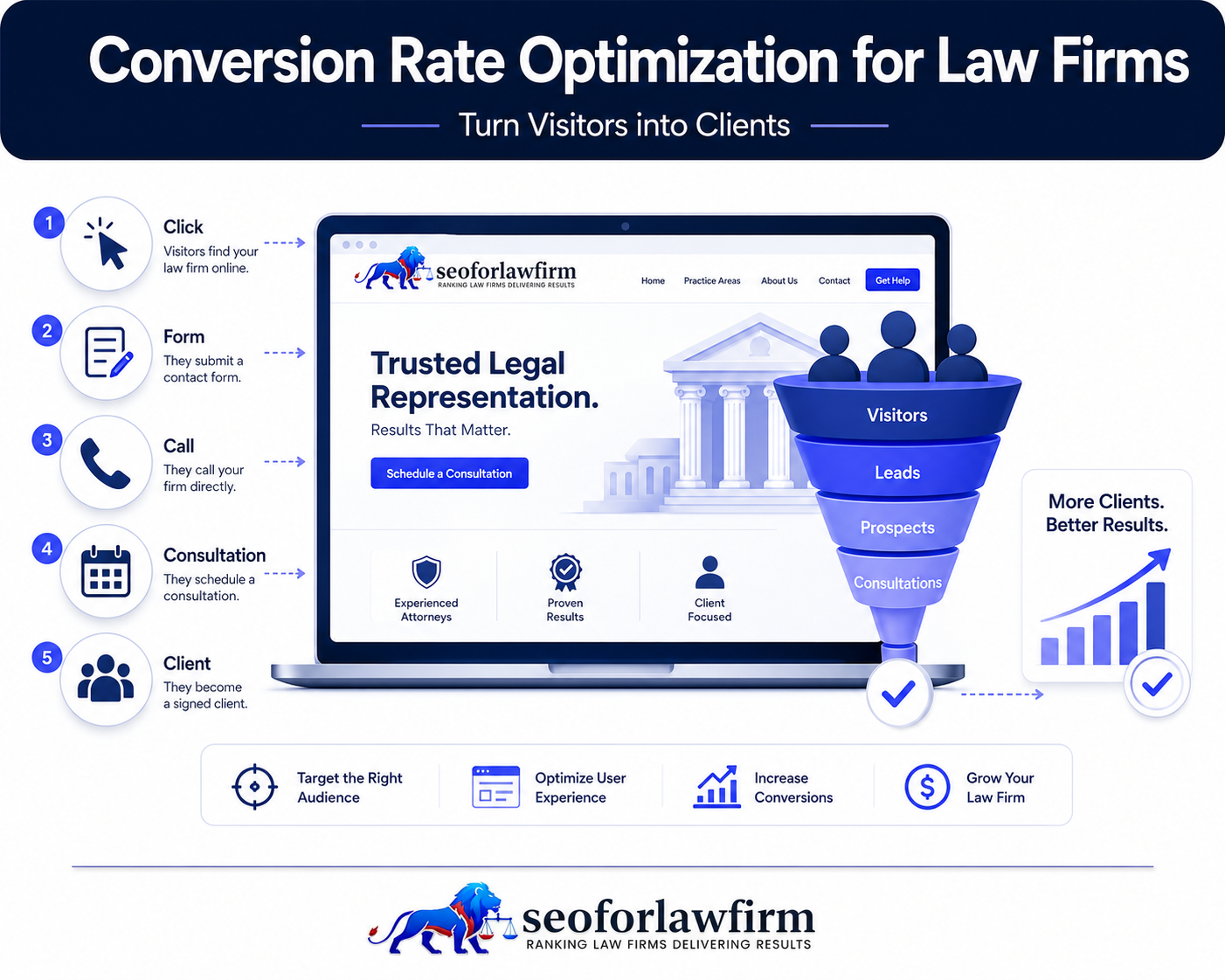
Optimize the Entire Search-to-Intake Journey
What Is Conversion Rate Optimization for Law Firms?
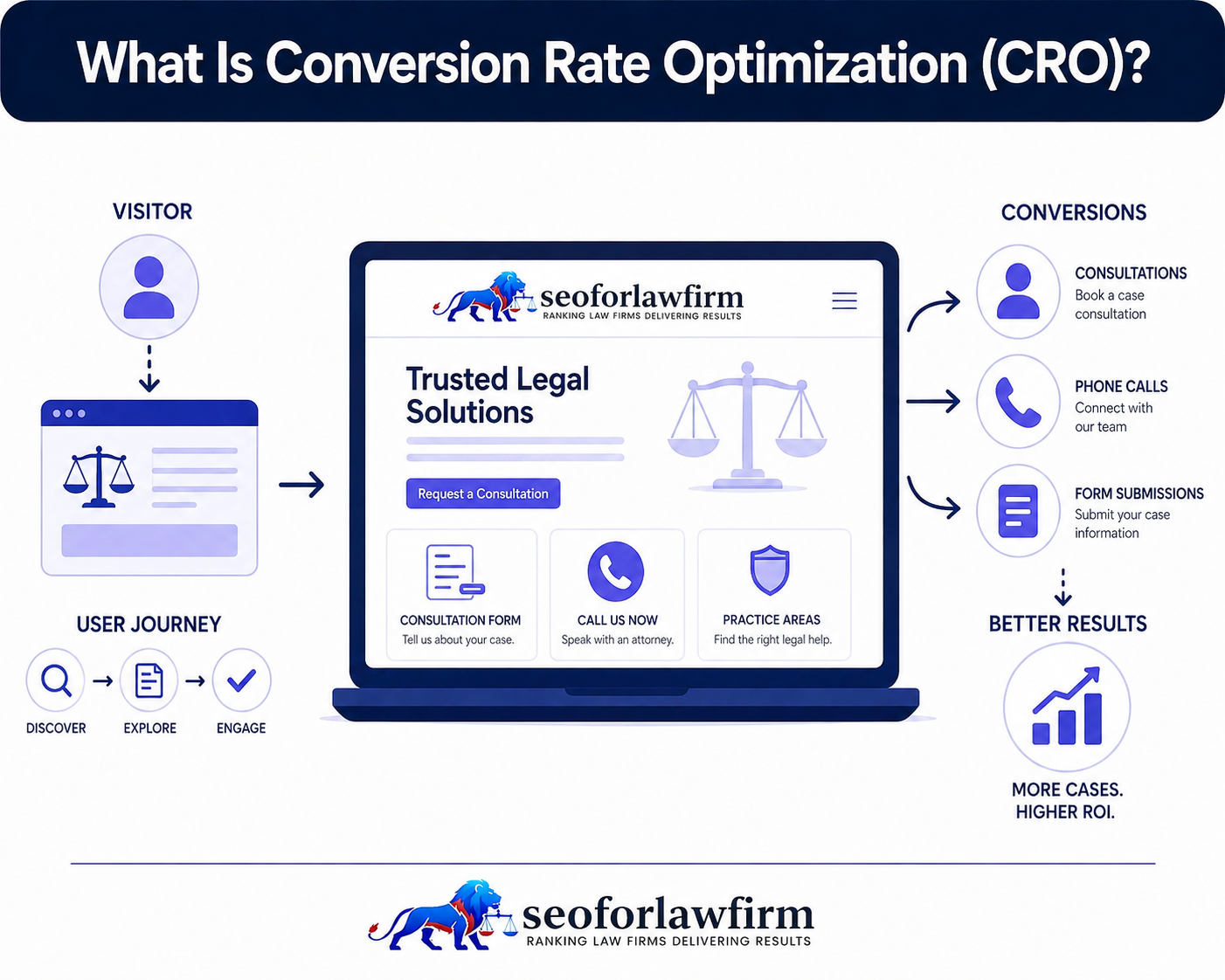
Conversion Rate Optimization is the process of improving a law firm's website so a larger percentage of qualified visitors complete calls, forms, chats, or consultation actions.
CRO examines the points where prospective clients hesitate, abandon a page, ignore an action, leave a form, or fail to move from legal information into intake.
SEOForLawFirm treats the website as a digital intake system. Traffic, page behavior, attorney trust, content, forms, mobile interaction, and intake routing are measured as one client journey.
- Visitor behavior
- Consultation pathways
- Calls and form submissions
- Trust placement
- Lead attribution
Why CRO Matters for Law Firms
Law firms lose qualified inquiries when high-intent visitors encounter slow pages, unclear messaging, hidden phone actions, long forms, weak attorney proof, or confusing next steps.
CRO identifies those barriers and restructures the visitor journey around the action that matters: requesting legal help.

Traffic Without Action Produces No Intake
Organic, PPC, social, referral, and direct traffic only create business value when qualified users move into calls, forms, or consultations.
Small Friction Points Compound
Long forms, poor spacing, buried CTAs, unclear fees, slow mobile rendering, and weak next-step messaging increase abandonment.
Legal Decisions Depend on Trust
Attorney credentials, experience, verified reviews, case context, service clarity, and professional design need visibility near decision points.
SEOForLawFirm’s Law Firm CRO Framework
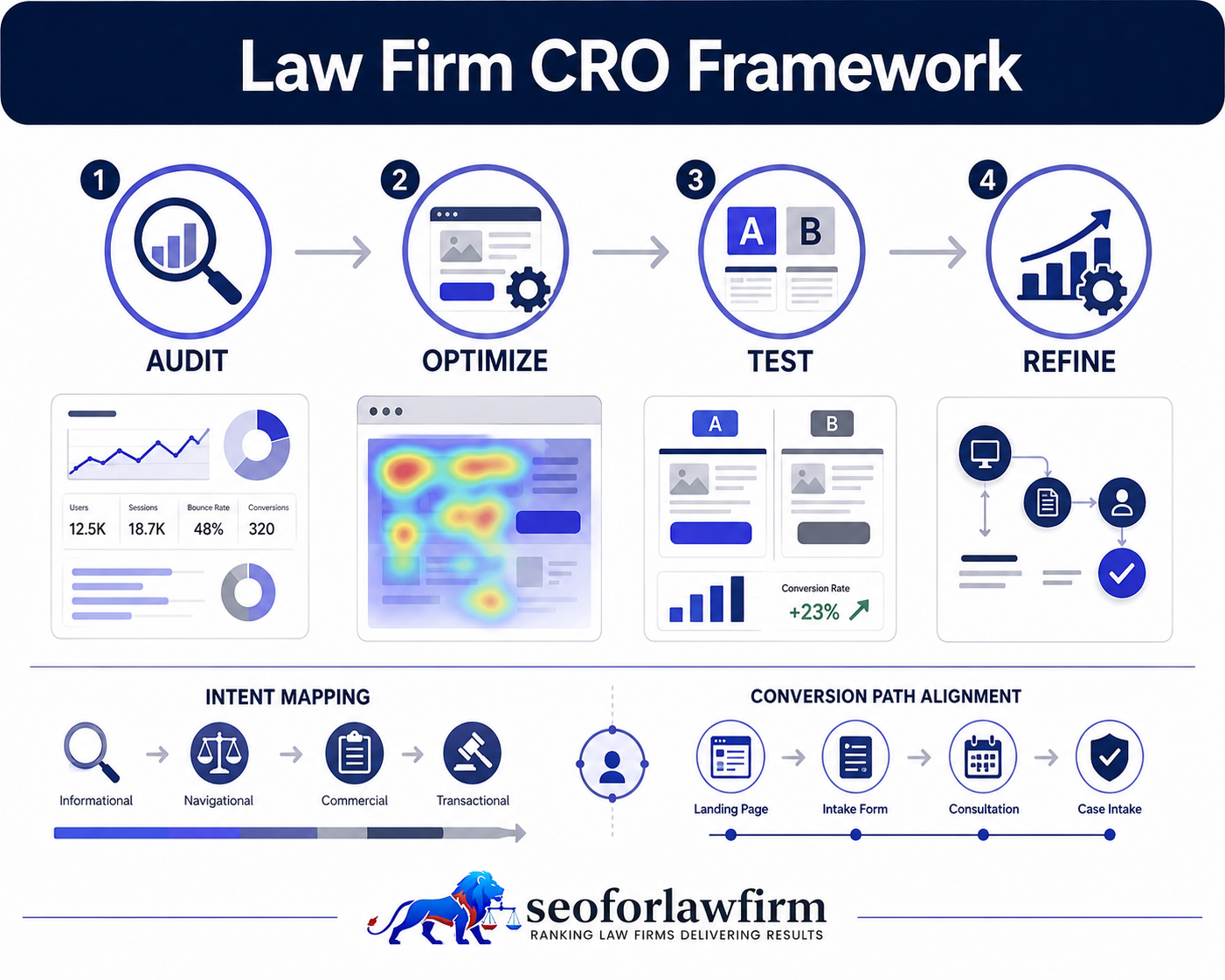
The CRO process moves from behavioral diagnosis into optimization, testing, intent alignment, intake routing, and continuous refinement.
- 01
Audit
Analyze page exits, scroll depth, click behavior, calls, form abandonment, conversion funnels, mobile behavior, and traffic sources.
- 02
Optimize
Refine layouts, CTA prominence, trust placement, mobile usability, copy hierarchy, forms, page speed, and service-page progression.
- 03
Test
Compare page structures, headlines, CTA language, form lengths, trust elements, and conversion paths using controlled experiments.
- 04
Intent Mapping
Match research, comparison, urgent, and decision-stage visitors with page structures and actions suited to readiness to contact counsel.
- 05
Intake Alignment
Connect high-performing pages with call tracking, consultation forms, CRM workflows, confirmation steps, and intake-team routing.
- 06
Refine
Apply conversion data continuously so stronger variants replace weak experiences and future tests address the next measurable bottleneck.
Elements That Influence Law Firm Conversion Rates
SEOForLawFirm evaluates the design, message, speed, forms, trust, and mobile interactions that influence whether a visitor requests legal help.
Design & Layout
Visual hierarchy, content grouping, spacing, navigation, attorney presentation, CTA prominence, and page progression guide client decisions.
Content & Messaging
Headlines and body copy need to clarify the legal problem, service, attorney fit, process, expectations, and next action.
Site Performance
Faster loading, stable layouts, responsive media, and clean technical delivery reduce abandonment before legal content is consumed.
Forms & Intake
Form length, field sequence, validation, mobile keyboards, confirmation messages, and intake routing influence submission completion.
Mobile Conversion
Large touch targets, click-to-call controls, readable layouts, accessible forms, clear spacing, and visible contact actions support mobile intent.
Optimizing Legal Website Design for Conversions
Conversion-focused legal design makes the correct next action obvious without reducing the credibility or depth expected from a law firm.
SEOForLawFirm reorganizes hierarchy around the legal problem, attorney proof, service explanation, consultation action, and supporting trust information.
Reviews, bar credentials, attorney experience, service-specific evidence, FAQs, contact options, and intake actions are positioned according to visitor decision points rather than decorative preference.
- Clear visual hierarchy
- Visible consultation CTAs
- Attorney trust placement
- Reduced page distractions
- Accessible mobile layouts

Optimizing Legal Content for Conversion
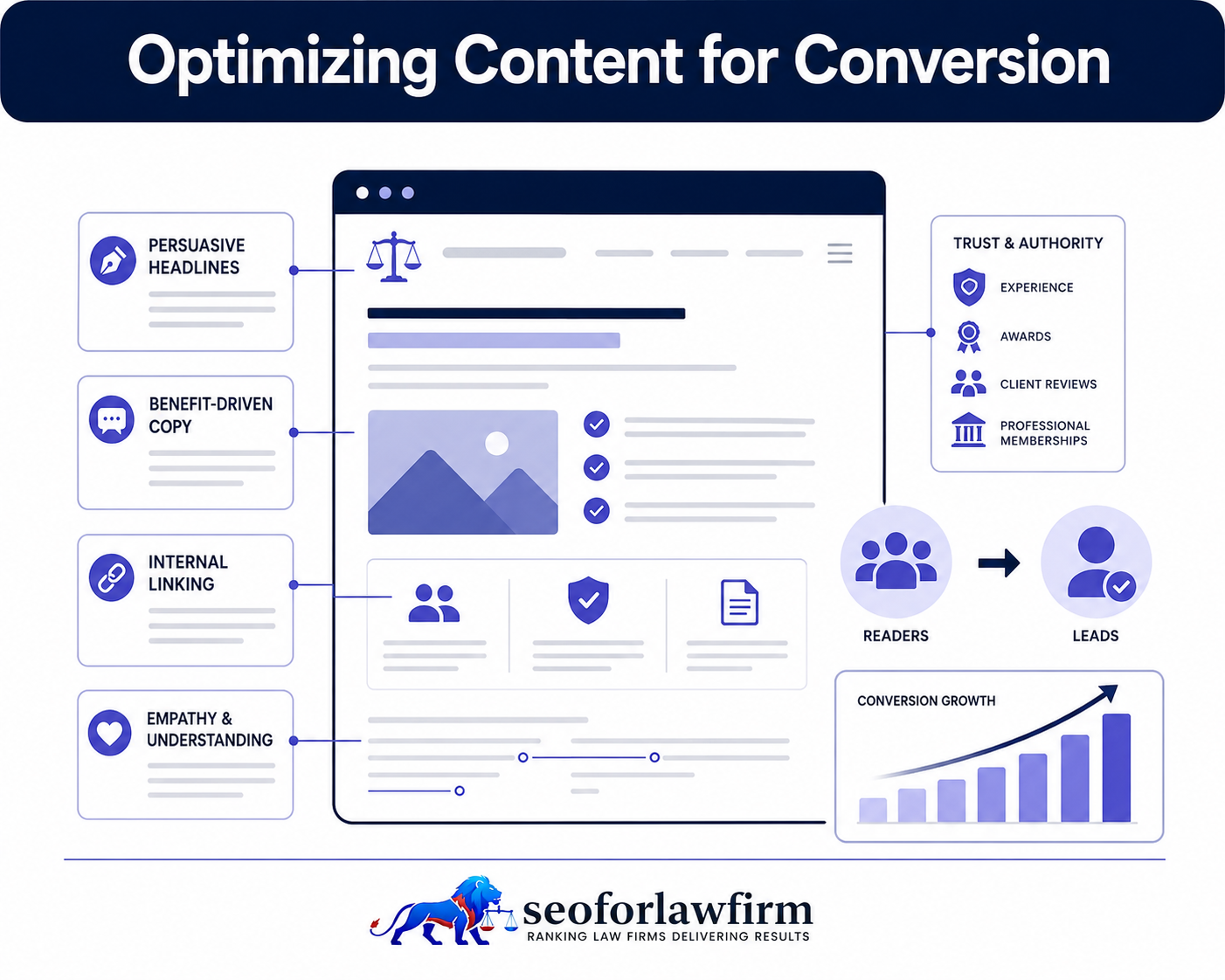
Conversion copy connects the visitor's legal concern with the service, attorney, process, expected next step, and reason to make contact.
SEOForLawFirm tests headlines, introductory copy, attorney positioning, service explanations, proof elements, FAQs, calls to action, and content sequence against actual visitor behavior.
Educational pages also receive conversion paths into relevant service pages so informational traffic does not reach a dead end.
Mobile Optimization for Law Firms
Mobile CRO reduces the number of interactions required for a prospective client to understand a legal service and contact the firm.
SEOForLawFirm improves mobile spacing, page speed, touch targets, form fields, click-to-call actions, sticky contact controls, content hierarchy, readability, and attorney proof placement.

A/B Testing & Conversion Analytics
SEOForLawFirm uses behavioral data and controlled tests to determine which page variants produce more qualified consultation actions.
GA4, Hotjar, and Microsoft Clarity can reveal click paths, scroll depth, page exits, form behavior, device differences, and interaction patterns.
Tests focus on meaningful conversion variables such as CTA language, contact placement, form length, page hierarchy, attorney trust, mobile controls, and service messaging.

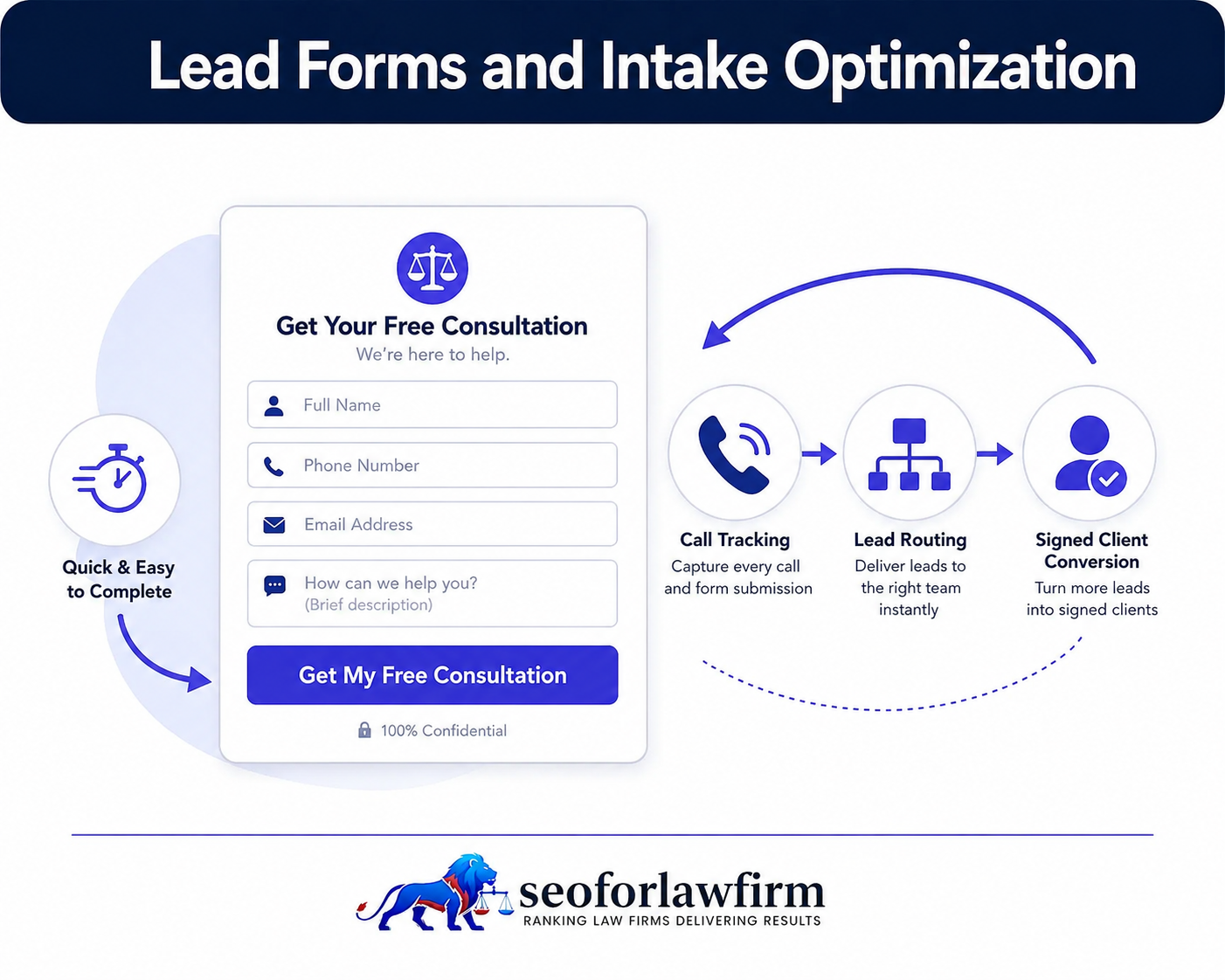
Lead Forms & Intake Optimization
A consultation form needs enough information to route a legal inquiry without creating unnecessary friction before submission.
SEOForLawFirm reviews form location, field count, labels, required fields, validation, privacy context, CTA language, mobile input behavior, confirmation screens, tracking, and intake routing.
High-intent pages also receive alternate contact options such as click-to-call actions when phone intake better matches the legal situation.
CRO Performance Metrics for Law Firms
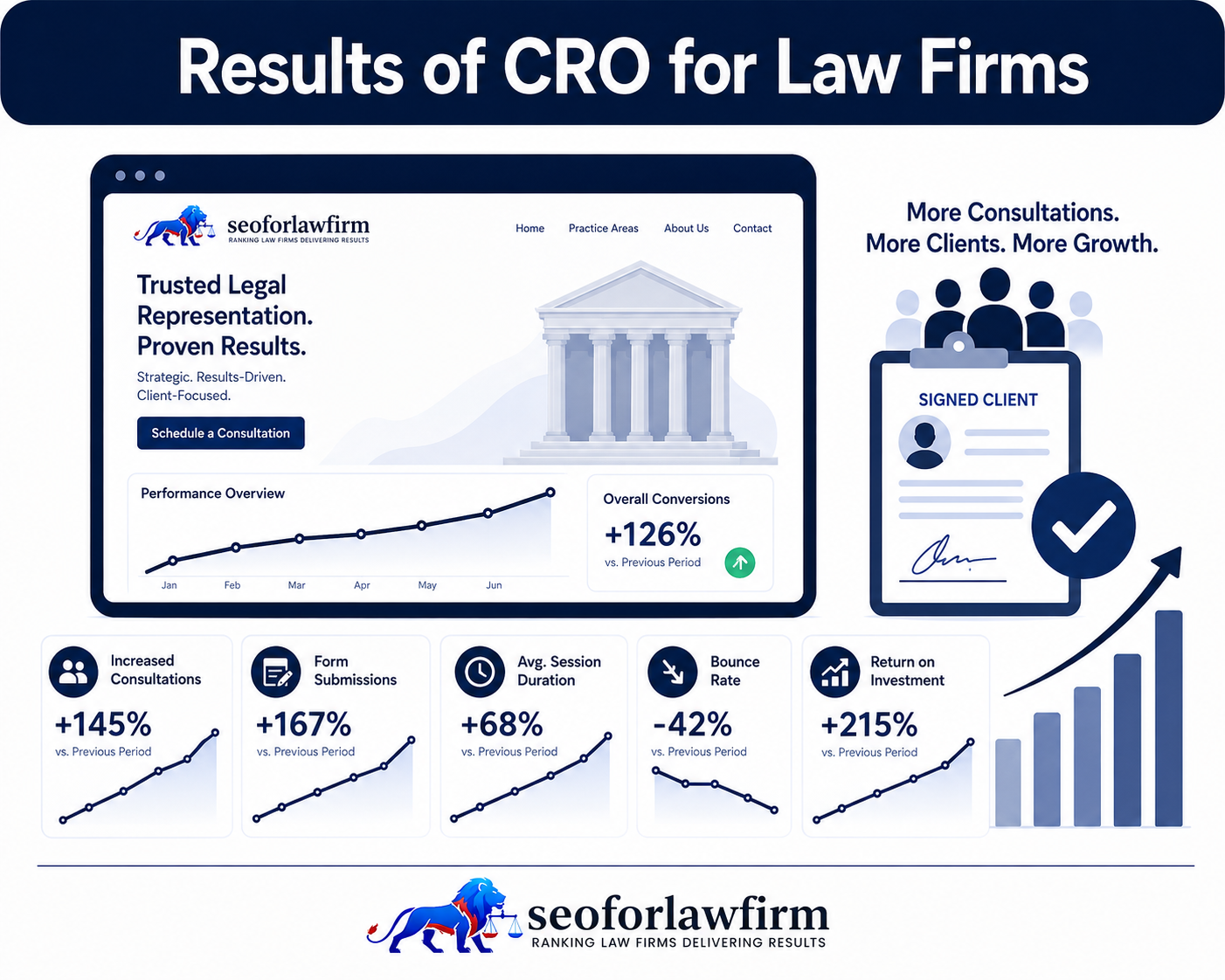
Conversion reporting needs to connect website behavior with qualified legal inquiries rather than treating page views or clicks as standalone outcomes.
Performance Figures Referenced in the Supplied CRO Framework
These figures come from the supplied CRO framework and are presented as framework benchmarks rather than guaranteed outcomes for every law firm.
Why Choose SEOForLawFirm for Law Firm CRO?
Legal Client Journeys
Testing reflects legal-service intent, urgency, trust requirements, attorney evaluation, jurisdiction, and consultation behavior.
Behavioral Data
Click patterns, page exits, heatmaps, scroll behavior, form abandonment, call actions, and conversion funnels guide prioritization.
Controlled Testing
Page changes are tested against conversion behavior instead of relying only on aesthetic preference or competitor imitation.
Intake Alignment
Calls, forms, consultation actions, confirmation steps, tracking, CRM data, and intake workflows remain connected.
Selected Law Firm Conversion Outcomes
Website Conversion Rate
- Qualified consultations increased 106%
- Form abandonment decreased 43%
- Mobile calls increased 68%
- 27 additional retained matters
DUI Landing-Page Conversion
- Qualified calls increased 87%
- Mobile form completion increased 74%
- High-intent exits decreased 29%
- 23 additional retained matters
Overall Conversion Rate
- Consultation requests increased 91%
- Form completion increased 63%
- Attorney-to-contact clicks increased 72%
- 25 additional retained matters
Conversion Rate Optimization Client Results
Increased consultation submissions from existing website traffic by improving landing-page structure, contact forms, calls to action, mobile usability, and attorney trust signals.
“Our website was already attracting traffic, but too few visitors were becoming leads. The CRO work focused on the pages that received the most qualified traffic and removed friction from the consultation process. Service-page layouts were reorganized, contact forms were shortened, attorney credentials were positioned closer to conversion points, and mobile call actions became easier to use. We generated substantially more consultations without needing the same increase in advertising spend.”
- Website conversion rate increased from 3.6% to 7.4%
- Qualified consultation submissions increased 106%
- Contact-form abandonment decreased 43%
- Mobile click-to-call conversions increased 68%
- Cost per qualified lead decreased 32%
- Existing traffic produced 27 additional retained personal injury matters during the reporting period
Improved lead generation from high-intent DUI, felony defense, domestic violence, and arrest-related landing pages by reducing mobile friction and strengthening emergency contact pathways.
“Our biggest problem was not traffic. Prospective clients were reaching the site after urgent criminal searches, but too many were leaving before calling. The CRO strategy analyzed our highest-exit pages, simplified the mobile experience, moved phone actions into more prominent positions, clarified consultation messaging, and reduced distractions around high-intent pages. More visitors began calling directly after landing on the site.”
- DUI landing-page conversion rate increased from 4.8% to 9.1%
- Qualified phone calls increased 87%
- Mobile form completion increased 74%
- High-intent page exits decreased 29%
- Average cost per retained lead decreased 28%
- Conversion improvements contributed to 23 additional retained criminal-defense matters
Increased consultation conversion rates for divorce, child custody, mediation, and high-asset family law pages through stronger user journeys, trust elements, intake forms, and CTA placement.
“We had strong organic rankings and steady traffic, but our consultation numbers did not match the number of people visiting the site. The CRO campaign tested page structure, simplified our intake forms, improved attorney profile visibility, clarified what happened after someone requested a consultation, and created stronger paths between educational content and service pages. The site began converting more of the traffic we were already paying and working to attract.”
- Overall conversion rate increased from 3.1% to 6.5%
- Consultation requests increased 91%
- Form completion rate increased 63%
- Attorney-profile-to-contact clicks increased 72%
- Service-page abandonment decreased 35%
- CRO-generated conversion gains contributed to 25 additional retained family-law matters during the measurement period
Common CRO Mistakes Law Firms Make
No Conversion Tracking
Firms cannot identify page drop-off, form friction, weak campaigns, or productive traffic sources without defined conversion events.
Ignoring Mobile UX
Small touch targets, crowded layouts, buried phone actions, slow rendering, and difficult forms block urgent mobile users.
Weak Calls to Action
Generic or visually hidden actions fail to explain what happens next or why a prospective client should begin intake.
Copying Competitor Layouts
A layout that performs for another law firm does not prove the same information architecture fits your audience, traffic mix, or intake model.
Law Firm CRO Deliverables
Frequently Asked Questions About CRO for Law Firms
What is CRO, and how does it help law firms?
CRO improves how efficiently a law firm's website converts qualified visitors into phone calls, forms, chats, and consultations. The process focuses on visitor behavior, page structure, trust signals, copy, mobile usability, forms, and intake pathways.
How long until CRO results show?
The supplied framework places measurable CRO movement around 30–60 days when a website receives enough qualified traffic to support testing. Test volume, page traffic, implementation speed, and conversion frequency affect the timeline.
Does SEOForLawFirm test landing pages and mobile layouts?
Yes. CRO testing covers desktop and mobile landing-page structures, headlines, calls to action, forms, trust placement, phone actions, navigation, and other conversion variables.
What CRO tools does SEOForLawFirm use?
CRO analysis can use GA4, Hotjar, and Microsoft Clarity to examine conversion events, click behavior, scroll depth, page exits, heatmaps, session patterns, and form interaction.
Does CRO work with SEO?
Yes. SEO attracts qualified organic traffic, and CRO improves the rate at which that traffic moves from search entry pages into consultations and other measurable intake actions.
Does CRO reduce the need for more advertising spend?
CRO focuses first on extracting more consultation value from existing qualified traffic. Higher conversion efficiency can reduce cost per qualified lead when the same traffic source generates more useful inquiries.
Lets make you an extra +$10M in Revenue
Build a conversion system around legal search intent, behavioral analytics, mobile UX, stronger calls to action, shorter forms, attorney trust, A/B testing, call tracking, consultation attribution, and intake performance.