
SEO for Real Estate Lawyers
SEOForLawFirm provides SEO for real estate lawyers that ranks property law firms for transactional and dispute-based searches and turns those rankings into qualified consultations.
SEOForLawFirm grows real estate law firm visibility through search-intent content, local Map Pack positioning, technical SEO precision, and authority development across residential, commercial, and litigation practice areas.

One Real Estate SEO System, Multiple Hiring Intents
Core SEO Services for Real Estate Law Firms
SEOForLawFirm combines technical optimization, real-estate intent mapping, local visibility, content architecture, authority development, and conversion measurement so property-law searches connect to the correct legal service and consultation path.
Technical Audit & On-Page SEO
Crawl depth, Core Web Vitals, mobile performance, schema integrity, metadata, indexation, internal links, and property-law entity structure.
Keyword & Practice-Area Mapping
Closing, title, commercial property, boundary, partition, leasing, landlord-tenant, zoning, and city-specific legal intent.
Local SEO & Citation Accuracy
Google Business Profile optimization, Map Pack positioning, NAP consistency, legal citations, service-area pages, and local prominence.
Real Estate Content Marketing
Practice pages, city pages, FAQ hubs, property-dispute content, transaction guides, real estate contracts, zoning, title, and leasing clusters.
Link Building & Authority
Legal directories, property publications, bar associations, regional media, community sources, and real estate education platforms.
Measurement & SEO Reporting
Organic traffic, Map Pack rankings, GBP actions, calls, forms, practice-area performance, city performance, and retained-case attribution.
Real Estate Law Firm SEO Strategy
SEOForLawFirm runs a structured real estate law SEO framework built on audit, intent mapping, local dominance, and authority growth. The strategy builds scalable visibility across property transactions, zoning and land-use matters, title transfers, escrow disputes, HOA conflicts, and real estate contracts.

Closing, deeds, purchase agreements, title transfers, escrow, leasing, development, and commercial transaction searches receive distinct landing-page ownership.
Boundary disputes, easements, title conflicts, partition actions, landlord-tenant litigation, HOA conflicts, and ownership disputes remain semantically separated.
City pages, office entities, Google Business Profile signals, citations, and location-service combinations connect the firm to local property searches.
Legal and real-estate-adjacent backlinks reinforce property-law expertise without mixing unrelated practice-area signals.
How SEOForLawFirm Builds Property-Law Search Visibility
Technical Audit & On-Page Optimization
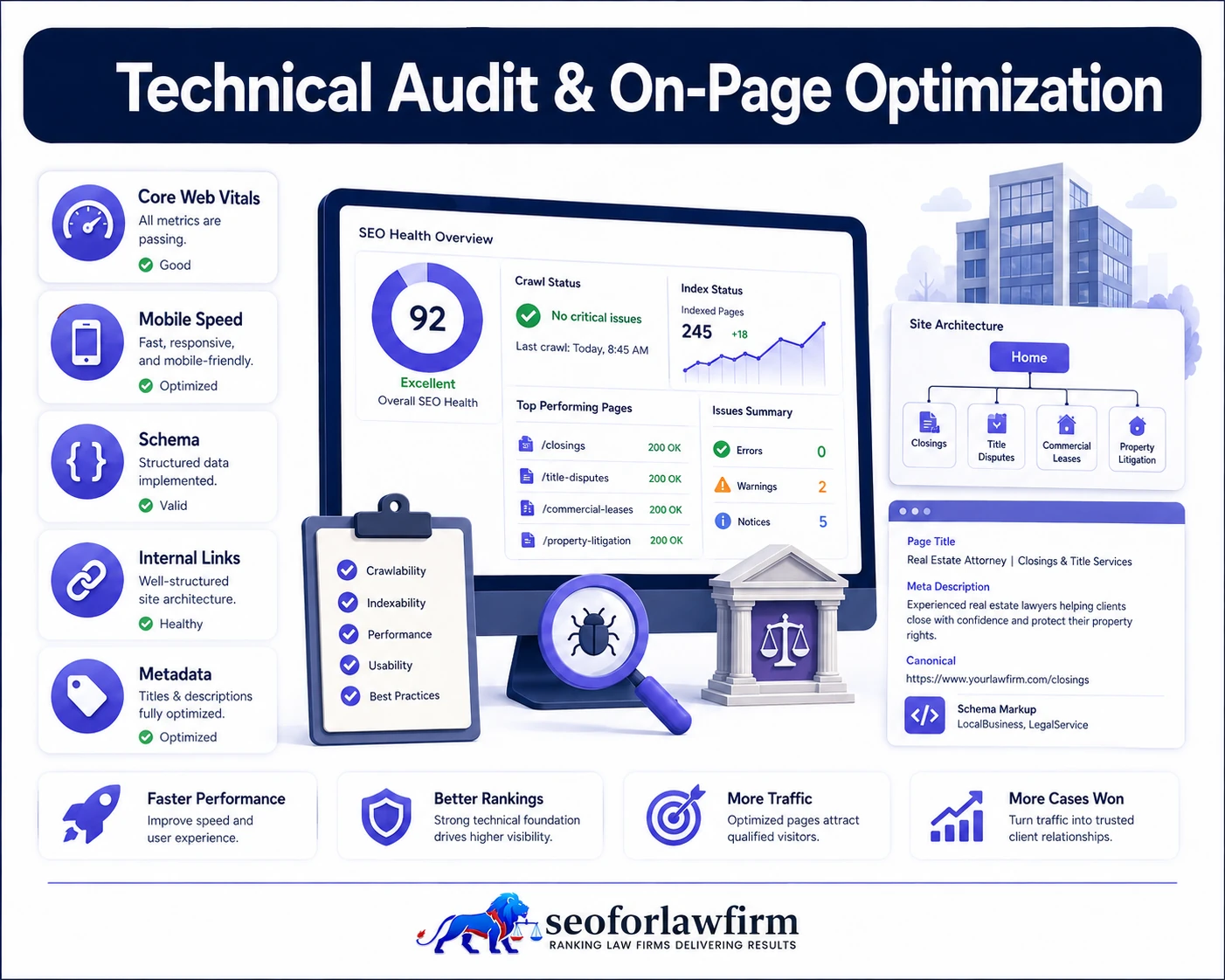
SEOForLawFirm starts with a technical and semantic audit that isolates ranking blockers and weak real-estate entities.
SEOForLawFirm improves Core Web Vitals, mobile speed, schema integrity, crawl depth, internal-link flow, indexation, and metadata alignment so real estate practice pages can be discovered and interpreted correctly.
Legal structured data connects real estate attorney services, location entities, attorney biographies, service pages, and supporting FAQs.
- Core Web Vitals
- Mobile property-search UX
- Crawl and index analysis
- Internal link architecture
- Real estate legal entities
Keyword & Practice-Area Semantic Mapping
SEOForLawFirm builds real estate keyword maps around case-type intent and local modifiers.
Transactional phrases include “real estate closing attorney [city],” “title transfer lawyer,” and “commercial real estate attorney.” Dispute searches include “property line dispute lawyer,” “partition action attorney,” and “landlord-tenant litigation lawyer.”
Each search family receives a distinct topical silo and conversion path so transaction, dispute, location, and informational pages do not compete unnecessarily with one another.
- Closing and transaction clusters
- Commercial property intent
- Title and ownership disputes
- Litigation keyword separation
- City + practice-area mapping

Local SEO & Citation Accuracy
SEOForLawFirm local SEO puts real estate law firms into the Map Pack for “near me” and city-based property searches.
Google Business Profile categories, services, photos, service areas, office details, and engagement fields are aligned with real-estate legal intent.
SEOForLawFirm also maintains NAP consistency across Avvo, Justia, FindLaw, Realtor-adjacent directories, local listings, and relevant regional sources.
- Google Business Profile
- Map Pack visibility
- Real estate citations
- NAP consistency
- Geo-targeted service pages

Real Estate Law Content Marketing
SEOForLawFirm content marketing builds topical authority around property transactions and disputes.
SEOForLawFirm creates practice pages, city pages, and FAQ hubs covering closings, title defects, easements, zoning variances, deed issues, landlord-tenant disputes, commercial leasing, property contracts, and related real estate matters.
Internal links connect supporting property content back to the appropriate service hub so the relationship between service, location, issue, attorney, and consultation remains explicit.
- Real estate practice pages
- City + property service pages
- Closing and title guides
- Dispute-focused FAQs
- Semantic internal links

Link Building & Authority Development
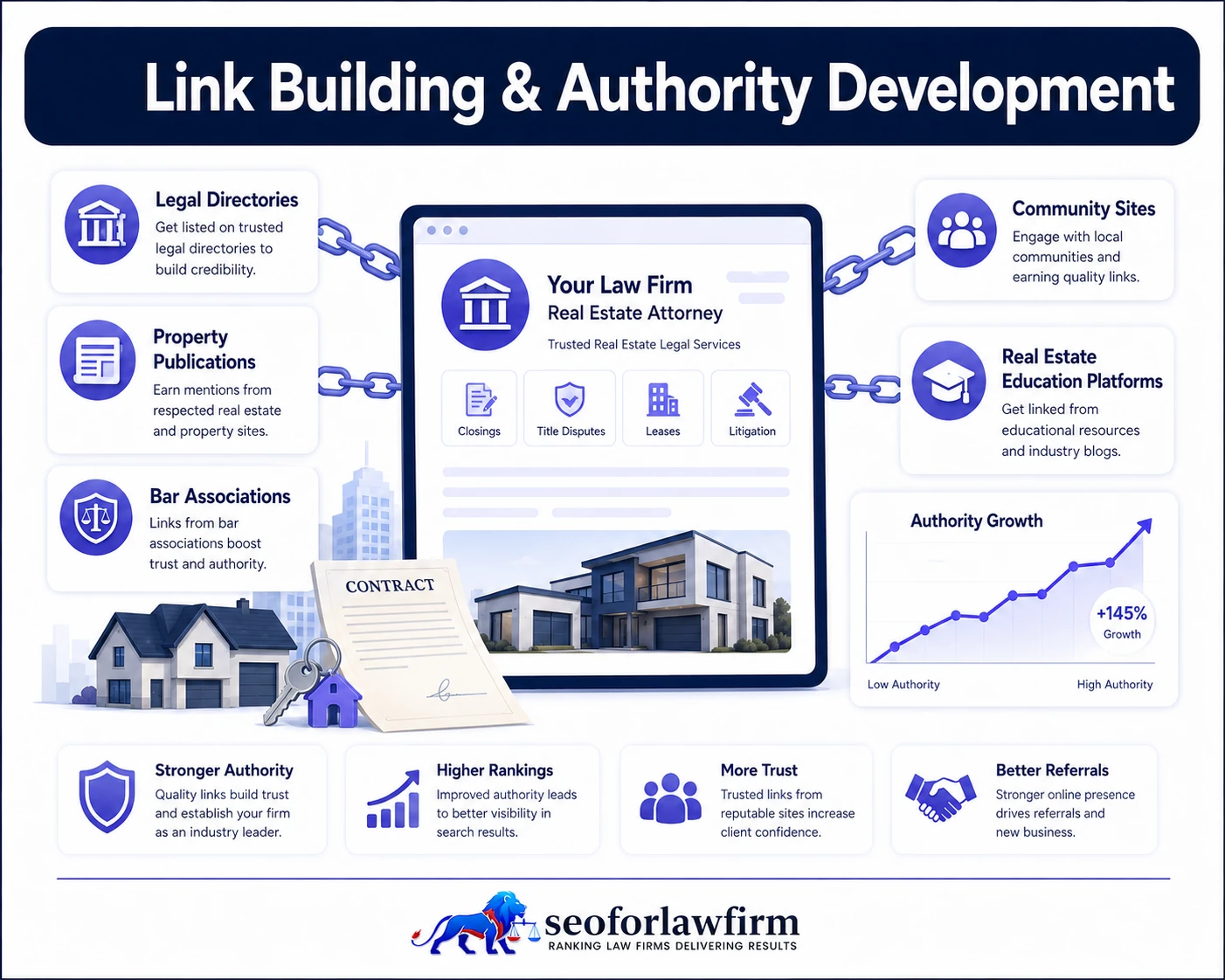
SEOForLawFirm link building earns relevant backlinks that increase real estate legal authority and ranking stability.
SEOForLawFirm targets placements from legal directories, property-industry publications, bar associations, community outlets, local media, and real estate education platforms.
Destination pages and anchor context are matched to the property entity being supported rather than using unrelated links simply for volume.
- Property-industry publications
- Legal directory placements
- Bar association sources
- Regional authority links
- Topical backlink mapping
Measuring Real Estate Law SEO Success
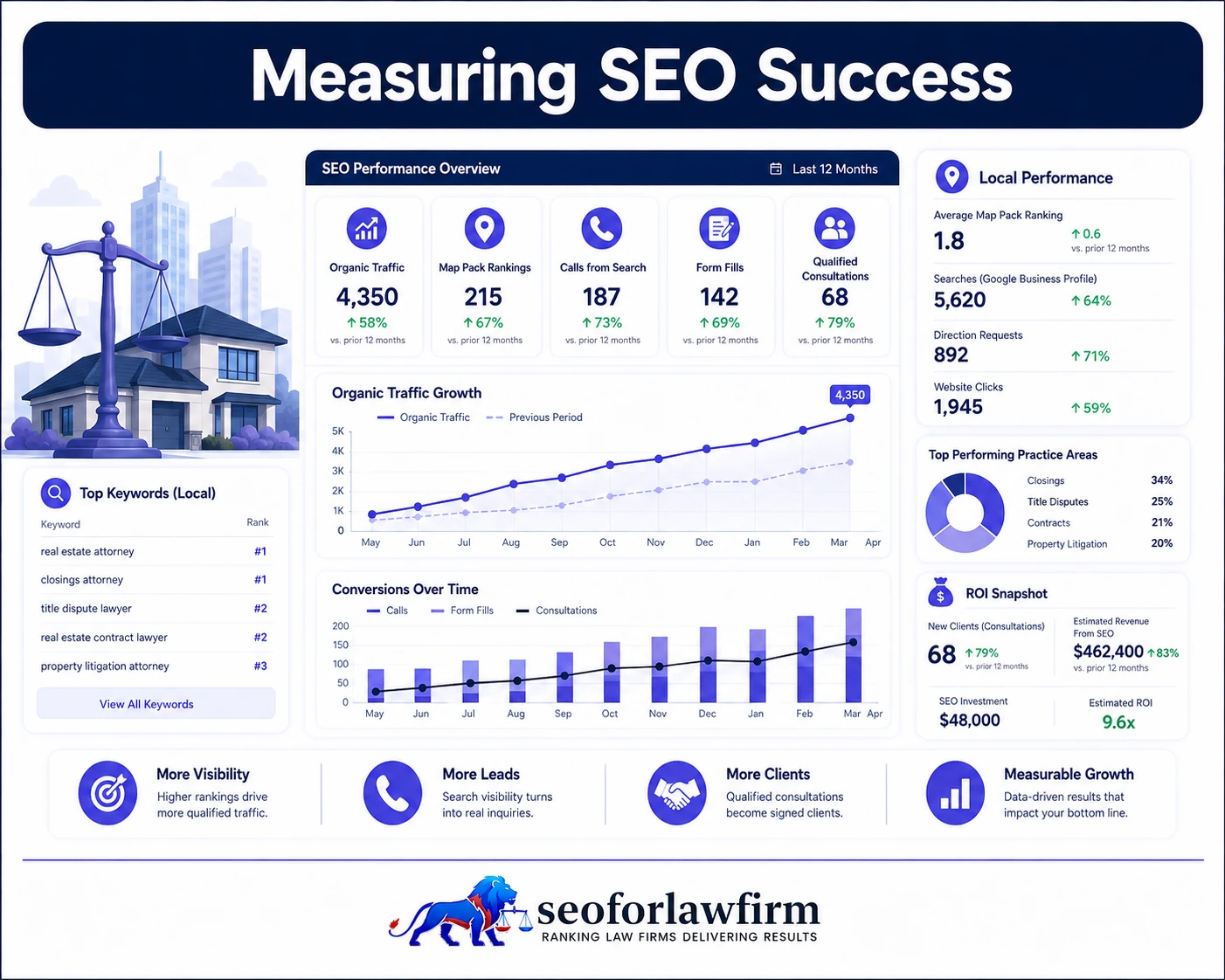
SEOForLawFirm measures success through consultations and retained matters rather than traffic alone.
Reporting tracks organic traffic to transaction and litigation pages, Map Pack rankings, Google Business Profile actions, calls, forms, local market performance, and retained-case attribution where intake systems support it.
Performance data shows which property services, cities, transaction types, and disputes are gaining visibility and which topical gaps require reinforcement.
- Transaction-page traffic
- Litigation-page traffic
- Map Pack rankings
- Calls and consultation forms
- Retained-case attribution
Why SEO Is Important for Real Estate Law Firms
Real estate law firms need SEO because clients hire from page-one results when searching for closings, title issues, commercial matters, and property disputes.
Prospective clients search phrases such as “real estate closing attorney near me,” “real estate attorney [city],” “property dispute lawyer,” “title dispute attorney,” and “commercial lease lawyer” while comparing legal relevance, local proximity, attorney credibility, and consultation options.

Property Matters Carry Direct Intent
Buyers, sellers, landlords, tenants, investors, developers, and property owners often search after a transaction or dispute already requires legal attention.
Real Estate Law Is Local
Office proximity, target cities, local property markets, Google Maps visibility, citations, and jurisdiction relevance affect attorney selection.
Intent Must Stay Separated
A closing client, commercial developer, landlord, title claimant, and boundary-dispute client require different service pages and search pathways.
SEO Challenges in Real Estate Law
Real estate lawyer SEO loses relevance when residential, commercial, litigation, and city intent overlap across several pages that compete for similar search terms.

Closing, purchase, leasing, investment, and commercial terms require distinct page ownership rather than one broad real estate page.
Competing property firms often target the same cities, ZIP codes, Map Pack positions, and transaction terms.
Short service pages struggle to establish complete relevance for nuanced transaction, zoning, title, leasing, and litigation matters.
Title disputes, quiet-title actions, property-boundary disputes, and real estate litigation can compete when page purpose and internal relationships are unclear.
Real Estate Law Firms SEOForLawFirm Serves
Real estate legal search architecture changes according to whether the firm's revenue comes from transactions, litigation, title work, leases, land use, development, or a combination of property-law services.
Residential Real Estate Firms
Closings, deeds, purchase agreements, title transfers, buyer representation, and seller representation.
Commercial Real Estate Firms
Commercial purchases, leases, development transactions, investment property, and business-property matters.
Real Estate Litigation Firms
Title disputes, ownership claims, boundary conflicts, partition matters, easements, and property litigation.
Title & Closing Practices
Title defects, deeds, closing documents, title transfers, transactional review, and ownership documentation.
Zoning & Land-Use Practices
Zoning variances, property use, development approvals, land-use disputes, and related local matters.
Landlord-Tenant Practices
Lease disputes, commercial tenancy issues, landlord representation, tenant disputes, and litigation.
Property Development Counsel
Development transactions, commercial projects, land acquisition, zoning matters, contracts, and investment issues.
HOA & Property Conflict Firms
HOA conflicts, ownership disputes, property restrictions, easements, and neighborhood property matters.
Why SEOForLawFirm for Real Estate Lawyer SEO
SEOForLawFirm combines technical SEO, local search optimization, semantic content engineering, property-intent architecture, and authority outreach to position real estate law firms for searches tied to closings, disputes, contracts, commercial property, and local legal representation.
Transaction, title, leasing, zoning, litigation, ownership, location, and attorney entities receive explicit relationships instead of being merged into broad pages.
Practice areas connect with cities, offices, service areas, Google Business Profile signals, and local property-market demand.
Authority development uses relevant legal and property-industry sources rather than backlinks that lack topical relationship to real estate law.
Reporting links rankings with transaction pages, litigation pages, calls, forms, geographic markets, and retained matters.
Selected Real Estate Lawyer SEO Outcomes
Organic Real Estate Law Leads
- Residential closing traffic increased 151%
- 26 high-intent keywords reached Google's top 10
- Consultation forms increased 83%
- 37 retained real estate matters
Commercial Real Estate Traffic
- Qualified business-property inquiries increased 88%
- 20 priority keywords reached positions 1–5
- Lease-dispute inquiries increased 76%
- 29 retained commercial real estate matters
Organic Phone Inquiries
- Litigation-page traffic increased 174%
- 19 dispute keywords reached positions 1–3
- Title and boundary inquiries increased 86%
- 33 retained matters
Real Estate Lawyer SEO Testimonials
Increased organic visibility and consultation requests for residential closings, title disputes, purchase agreements, boundary disputes, and real estate litigation.
“Our firm had a strong local reputation, but the website was not capturing enough search demand from buyers, sellers, investors, and property owners who needed legal help. The SEO campaign rebuilt our real estate service pages, improved local relevance, strengthened attorney authority signals, and created content around the transaction and dispute searches that usually lead to legal consultations. Within several months, we saw a stronger flow of qualified inquiries from people already dealing with active property matters.”
- Organic real estate law leads increased 114% in 8 months
- Residential closing page traffic increased 151%
- 26 high-intent real estate keywords reached Google's top 10
- Consultation form submissions increased 83%
- Organic conversion rate increased from 3.3% to 6.1%
- SEO contributed to 37 retained real estate matters
Expanded rankings for commercial real estate transactions, lease disputes, purchase and sale agreements, zoning issues, and development-related legal services.
“Our previous website described our services, but it did not reflect how commercial clients actually search for real estate counsel. The SEO strategy focused on transaction-specific pages, investor and developer search intent, stronger internal linking, local market relevance, and clearer consultation paths. The quality of incoming leads improved because more prospects contacted us after searching for the exact commercial real estate issue they needed help resolving.”
- Commercial real estate traffic increased 163%
- Qualified business-property inquiries increased 88%
- 20 priority keywords moved into positions 1–5
- Lease-dispute consultation requests increased 76%
- Organic traffic from target commercial markets increased 121%
- Search-generated inquiries produced 29 retained commercial real estate matters
Improved visibility for title disputes, easement conflicts, boundary litigation, landlord-tenant disputes, foreclosure matters, and property ownership claims.
“Our litigation work depends on reaching property owners when a dispute has already become serious. The SEO campaign expanded our litigation pages, improved local search signals, strengthened mobile conversion paths, and built stronger content around title, ownership, easement, boundary, and foreclosure disputes. We began receiving more calls from people who were already facing active property conflicts and needed legal representation rather than general information.”
- Organic phone inquiries increased 131%
- Real estate litigation page traffic increased 174%
- 19 dispute-related keywords reached positions 1–3
- Mobile click-to-call conversions increased 71%
- Title and boundary dispute inquiries increased 86%
- Organic search generated 33 retained matters, including 14 property litigation and title-dispute cases
Monthly Real Estate Lawyer SEO Deliverables
Frequently Asked Questions About Real Estate Lawyer SEO
How long does SEO take for real estate law firms?
Most real estate law firms see measurable SEO movement in 3–6 months, with stronger first-page stability by months 6–12 in competitive metropolitan markets.
Is SEO better than PPC for real estate lawyers?
Yes, SEO is better than PPC for a real estate lawyer when the objective is durable organic acquisition. PPC can support a faster short-term ramp, but organic rankings continue generating visibility without a charge for every individual click.
How do real estate attorneys rank on Google Maps?
Ranking in Google Maps requires an optimized Google Business Profile, consistent NAP citations, strong local reviews, relevant legal services, and geo-relevant property-law pages aligned with proximity, relevance, and prominence.
What does real estate lawyer SEO cost?
Real estate law SEO typically ranges from $2,000–$6,000 per month depending on city competition, practice breadth, number of markets, content scope, technical work, local visibility, and authority requirements.
Can SEO increase real estate law leads?
Yes. The supplied real estate SEO framework places typical qualified-lead growth around 30–50% during the first year when transaction and dispute searches are mapped to conversion-focused service pages.
Lets make you an extra +$10M in Revenue
Build search visibility around property transactions, closings, title matters, commercial real estate, zoning, leasing, disputes, target cities, local Maps visibility, attorney authority, and consultation-ready property searches.