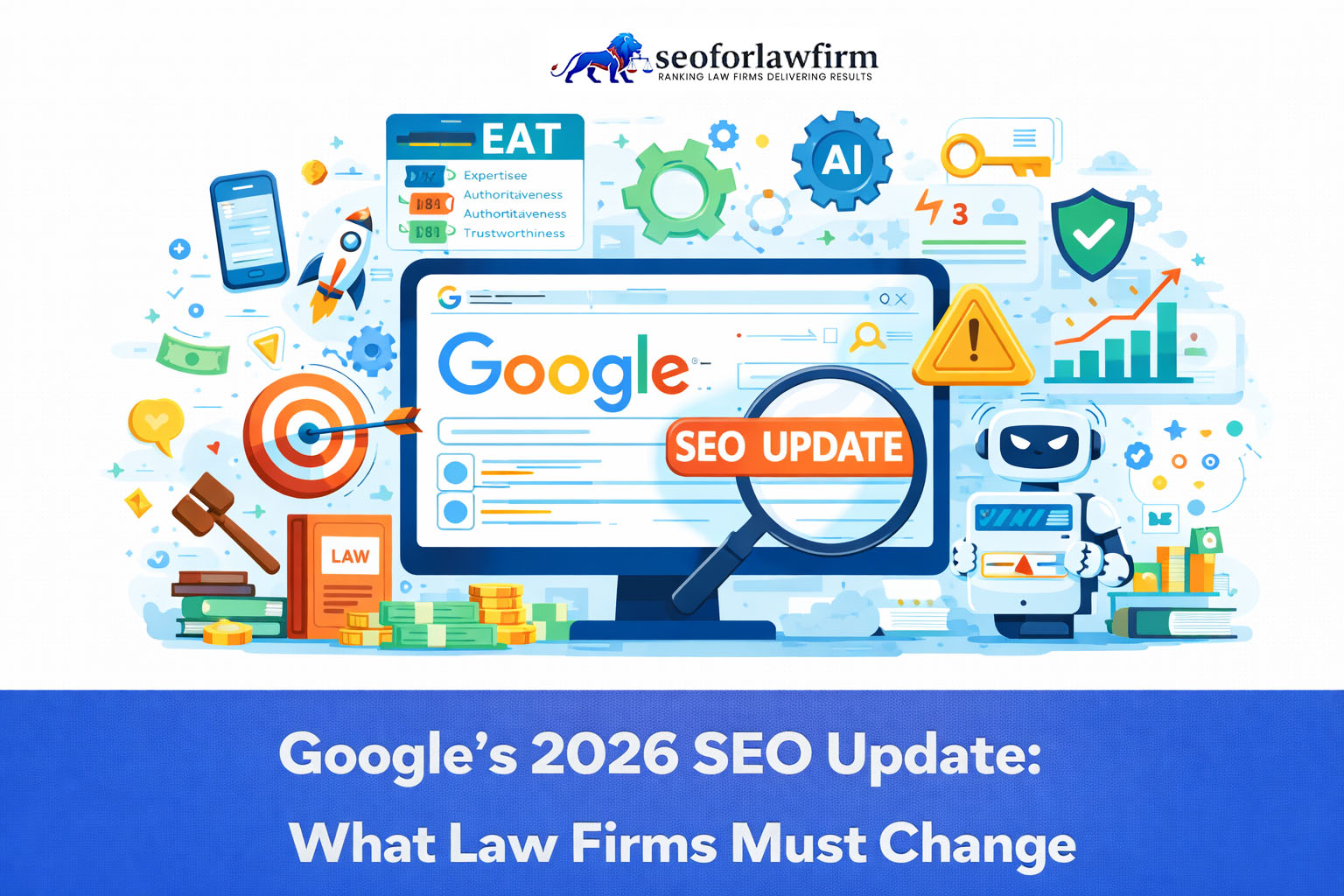
Google’s major 2026 SEO changes include the March and May core updates and the March and June spam updates. The changes also include the February Discover core update and the removal of FAQ rich results. Google also introduced new generative-AI optimization guidance and new Search Console reporting for AI Overviews and AI Mode. Google released the March 2026 core update on March 27 and completed its rollout on April 8, but Google did not announce that the update applied a new fixed weighting to information gain, E-E-A-T, AI content, links, or any other individual ranking factor.
Google released the May 2026 core update on May 21 and completed the rollout on June 2. Google describes core updates as broad changes intended to improve the usefulness and reliability of search results rather than updates targeting a particular website type, SEO tactic, or individual ranking signal.
Google also released global spam updates on March 24 and June 24, 2026. Google did not publish a list of individual techniques targeted by either rollout, but its current spam policies explicitly apply to attempts to manipulate traditional rankings and generative AI responses in Google Search.
Google’s February 2026 Discover core update made Discover more focused on locally relevant content, reduced sensational or clickbait content, and increased the visibility of in-depth, original, timely content from websites demonstrating topic-specific expertise. The Discover update applies to Google Discover rather than functioning as a named web-search core update.
Google permanently stopped showing FAQ rich results beginning May 7, 2026, and later removed its FAQ rich-result documentation. Law firms can continue publishing FAQ content when the questions help clients, but FAQPage markup no longer creates a Google FAQ rich result. Google also states that structured data is not required for generative AI search, so FAQ schema should not be retained solely under the assumption that it increases AI Overview citations.
Google published new generative AI optimization guidance on May 15, 2026. The guidance prioritizes unique, valuable, non-commodity content, first-hand perspectives, crawlable pages, strong technical SEO, local business information, useful images and video, and people-first organization. Google explicitly states that separate AEO/GEO hacks, special AI markup, tiny content chunks, and rewritten pages created only for AI systems are unnecessary.
Google introduced dedicated generative AI performance reports in Search Console on June 3, 2026, for a subset of websites. The dedicated report currently focuses on impressions from AI Overviews and AI Mode and allows analysis by page, country, device, and date. Clicks from AI search experiences remain part of Google’s broader performance measurement methodology, but the dedicated generative AI report does not currently provide a separate click metric.
Law firms need to respond to these changes through original attorney-led legal information, stronger jurisdictional specificity, accurate authorship and credentials, spam-safe content and link acquisition, technically accessible pages, accurate local business data, and measurement that includes both conventional search and generative AI visibility.
Table of Contents
- Article sections will appear here.
What Google SEO Updates Happened in 2026?
Google’s confirmed 2026 search changes include 2 broad core updates, 2 global spam updates, 1 Discover core update, FAQ rich-result removal, new generative AI optimization guidance, and dedicated generative AI visibility reporting in Search Console.
The 2026 changes reinforce the importance of Google SEO ranking factors for law firms such as useful content, spam compliance, technical accessibility, local relevance, authority, and page experience.
The table below shows the verified Google Search updates and documentation changes that affect law firm SEO in 2026.
| Date | Google Change | What Google Confirmed | Law Firm SEO Impact |
| February 5, 2026 | Discover core update | Greater local relevance, less clickbait, more original, timely, in-depth topic expertise | Improves the case for original legal commentary and locally relevant publishing in Discover |
| March 24, 2026 | March spam update | Global spam update across all languages | Review scaled content, artificial links, and other spam-policy risks |
| March 27, 2026 | March core update | Broad core ranking update | Compare affected pages and queries after rollout; avoid assumptions about individual factor weights |
| May 7, 2026 | FAQ rich-result removal | FAQ rich results stopped appearing in Google Search | Keep useful FAQ content but stop treating FAQ schema as a SERP enhancement |
| May 15, 2026 | Generative AI optimization guide | SEO remains foundational; unique non-commodity content receives priority in Google’s guidance | Build original attorney-led information for Search, AI Overviews, and AI Mode |
| May 15, 2026 | Spam-policy clarification | Spam policies also apply to generative AI responses | Avoid attempts to manipulate AI citations, mentions, links, or scaled query coverage |
| May 21, 2026 | May core update | Broad core ranking update | Assess sustained page and query changes after rollout |
| June 3, 2026 | Generative AI performance reports | Dedicated AI Overview and AI Mode impression reporting begins rolling out | Add AI visibility to SEO reporting where the feature is available |
| June 15, 2026 | llms.txt clarification | Google Search does not use llms.txt for ranking or AI visibility | Do not treat llms.txt as a Google SEO requirement |
| June 24, 2026 | June spam update | Global spam update across all languages | Reassess scaled content, artificial authority tactics, and policy compliance |
Google’s Search Status Dashboard confirms the March core update, May core update, March spam update, June spam update, and February Discover update.

What Was the March 2026 Google Core Update?
The March 2026 Google core update was a broad ranking-system update that began on March 27, 2026, and finished on April 8, 2026. Google did not publish a law-firm-specific list of ranking-factor changes or state that the rollout applied a new numerical weight to information gain, attorney authorship, backlinks, AI-generated text, E-E-A-T, or user-engagement metrics.
Google’s core-update guidance states that broad core updates reassess how its systems identify useful and reliable results across the web. A page losing positions after an update is not automatically being penalized. Other pages can become more competitive because Google’s systems reassess the available result set.
Listed below are the 8 areas law firms must review after the March 2026 core update.
- Affected practice-area pages.
- Affected location pages.
- Lost search queries.
- Desktop versus mobile changes.
- Web versus image or video performance.
- Competitors that gained visibility.
- Legal information competitors provide that the firm omits.
- Attorney experience or evidence missing from affected content.
Google recommends waiting at least 1 full week after a core update finishes before comparing Search Console performance with a period before the update.
What Was the May 2026 Google Core Update?
The May 2026 Google core update was a broad core ranking update that ran from May 21 through June 2, 2026. Google did not publicly attribute the update to a specific E-E-A-T increase, information-gain weighting, AI-content classifier, backlink weighting, or legal-content system.
The timing matters because several separate Google changes happened during May and early June.
Listed below are the 4 Google changes that occurred near the May 2026 core update.
- FAQ rich-result removal on May 7
- Google’s AI optimization guidance on May 15
- A spam-policy clarification on May 15
- The generative AI reporting announcement on June 3
Those events are separate Google changes. The proximity of their dates does not prove that every change formed part of the May core algorithm.
Law firms need to avoid attributing a May traffic change to one speculative factor without page-level evidence.
Did Google Increase the Importance of Information Gain in 2026?
No, Google did not announce information gain as a newly weighted ranking factor in 2026. Google’s guidance favors original, unique, and experience-based content that adds information beyond existing web summaries.
Listed below are the 6 content qualities Google encourages for distinctive and useful information.
- Original information
- Unique viewpoints
- First-hand perspectives
- Expert or experienced observations
- Material that goes beyond common knowledge
- Information that cannot be produced by simply summarizing existing search results
Google states that unique, compelling, useful content is likely to influence long-term presence within generative AI search more than many tactical optimization techniques.
Listed below are the 12 types of information gain law firms can add to legal content.
- Attorney observations from recurring case patterns
- Jurisdiction-specific procedural differences
- County court filing processes
- Original public-record analysis
- State legal deadline tables
- Evidence checklists based on case type
- Local agency contact information
- Original case-data analysis
- Settlement-process explanations
- Common documentation problems
- Anonymized case examples
- Attorney commentary on new statutes or rulings
Information gain works as an editorial principle for producing stronger legal content. Google has not published a numerical “information gain score” that law firms can optimize.
Does Google Penalize AI-Generated Content in 2026?
No, Google does not penalize content merely because generative AI assisted in its creation. Google targets scaled content created primarily to manipulate Search and content that lacks sufficient user value.
Google states that generative AI can assist with research and content structure. Google also states that producing large numbers of pages without adding value can violate its scaled content abuse policy.
Listed below are the 10 AI-content patterns that create greater SEO risk for law firms in 2026.
- Publishing hundreds of city pages with nearly identical legal copy
- Generating separate pages for every minor keyword variation
- Rewriting competitors without contributing attorney experience
- Publishing legal advice without factual verification
- Creating fictional case examples or statistics
- Inventing attorney quotations
- Generating fake citations or studies
- Creating articles across legal areas the firm does not practice
- Producing large volumes of content primarily to capture search queries
- Publishing AI output without jurisdictional or attorney review
Google’s AI optimization guidance also states that generating pages for every possible fan-out query primarily to manipulate rankings or generative AI responses can violate the scaled content abuse policy.
What Changed With Google Spam Enforcement in 2026?
Google released global spam updates in March and June 2026 and clarified that its spam policies apply to attempts to manipulate generative AI responses as well as standard Google Search rankings.
The March spam update ran from March 24 to March 25. The June spam update ran from June 24 to June 26. Both applied globally and across all languages. Google did not publish a detailed list of the systems or spam techniques targeted by either rollout.
Listed below are the 12 spam practices Google targets under its Search spam policies.
- Scaled content abuse
- Link spam
- Keyword stuffing
- Site reputation abuse
- Cloaking
- Doorway abuse
- Hidden text
- Sneaky redirects
- Scraped content
- Expired domain abuse
- Misleading functionality
- Malicious practices
Google updated its policy wording in 2026 to make clear that attempts to manipulate generative AI responses also fall within Search spam enforcement.
Law firms should not purchase or manufacture artificial “AI citations,” fake forum mentions, paid articles passing ranking credit, automated backlinks, or mass-produced third-party references solely to influence AI Overviews or AI Mode.
What Changed in Google Discover in February 2026?
Google’s February 2026 Discover core update increased the focus on locally relevant, original, timely, in-depth content and reduced sensational content and clickbait.
Listed below are the 7 types of Discover-aligned content law firms can publish.
- More locally relevant content from websites based in the user’s country
- Less sensational and clickbait-oriented content
- More original, timely, in-depth content from sites demonstrating expertise on the subject
The update initially targeted English-language users in the United States, with broader language and country expansion planned afterward.
Law firms publishing Discover-eligible content gain stronger editorial alignment.
- New statute analysis
- Recent court-decision explanations
- Local legal developments
- State regulatory changes
- Original data
- Attorney commentary
- Timely public-interest legal information
What Changes Must Law Firms Make After Google’s 2026 Updates?
Law firms need to change content production, AI-search measurement, FAQ implementation, and core-update recovery processes after Google’s 2026 Search changes.
A structured law firm content SEO audit helps identify commodity legal content, weak authorship signals, scaled publishing risks, thin location pages, and missing original information that require improvement after Google’s 2026 updates.
Listed below are the 10 changes law firms must make after Google’s 2026 SEO updates.
- Replace commodity legal content with original legal information: Add attorney observations, jurisdictional differences, local procedures, original research, evidence requirements, and client decision guidance.
- Review scaled AI publishing: Remove production systems that generate large numbers of pages solely for keyword or AI-query coverage.
- Verify attorney authorship: Connect substantive legal pages with accurate attorney biographies, credentials, bar jurisdictions, and review dates where users expect professional authorship.
- Stop relying on FAQ rich results: Keep useful FAQs but remove any strategy that depends on Google displaying FAQ dropdowns.
- Measure AI visibility: Use the Generative AI performance report when Search Console gives the property access.
- Keep foundational SEO intact: Maintain crawlability, indexation, internal linking, page experience, mobile usability, and descriptive content.
- Strengthen information gain: Add original data, first-hand attorney perspectives, local legal information, decision tools, and analysis unavailable from generic summaries.
- Audit spam exposure: Review artificial links, scaled city pages, doorway pages, mass guest posts, paid ranking links, and manufactured AI mentions.
- Keep local business information accurate: Maintain a complete Google Business Profile, real office information, accurate categories, reviews, and localized website information.
- Analyze update losses methodically: Wait until an update finishes, compare the correct date periods, identify affected URLs and queries, and improve pages based on user value rather than speculative ranking-factor fixes.
Does FAQ Schema Help Law Firms Appear in AI Overviews?
No, FAQ schema does not improve a law firm’s eligibility for AI Overviews or AI Mode according to Google’s published guidance.
A study of official core guidelines by Google Search Central titled “Google’s Guide to Optimizing for Generative AI Features on Google Search” in 2026 found that structured data is not required for generative AI search, websites do not need special schema markup to appear in AI-generated search experiences, and website owners do not need to divide content into excessively small sections or rewrite pages specifically for AI systems. .
Law firms should organize legal questions and answers clearly because clear structure helps prospective clients find and understand relevant information. FAQPage schema can describe visible question-and-answer content, but the markup does not guarantee inclusion, citation, or increased visibility in AI Overviews or AI Mode.
What Changed With AI Overviews and AI Mode Reporting?
Google introduced dedicated generative AI performance reporting in Search Console on June 3, 2026, giving eligible website owners a separate view of impressions from AI Overviews and AI Mode.
Listed below are the 5 generative AI reporting metrics in Search Console.
- Generative AI impressions
- Pages appearing in generative AI features
- Country
- Device
- Date
Google is rolling the report out to a subset of website owners rather than every Search Console property at once.
The dedicated generative AI report currently centers on impression visibility rather than providing a separate click metric.
Google’s broader Search performance methodology still counts clicks from AI Mode links when users click through to an external page.
How Should Law Firms Measure AI Search Visibility in 2026?
Law firms should measure AI search visibility through Google’s Generative AI performance report where available. Firms should connect those impressions with Search Console, analytics, intake, and revenue data.
Listed below are the 7 measurements law firms should use to evaluate AI search performance.
- Generative AI impressions
- Pages appearing in AI Overviews or AI Mode
- AI visibility by country
- AI visibility by device
- Changes in branded searches
- Organic landing-page conversions
- Qualified consultations and retained matters
Third-party AI visibility tools can supplement research, but Google warns that no third-party SEO tool has access to Google’s internal ranking or generative AI systems.
How Do AI Overviews and AI Mode Find Law Firm Content?
AI Overviews and AI Mode use Google Search’s existing index and ranking systems to retrieve relevant web sources before generating supported responses.
Listed below are the 2 AI search retrieval techniques Google uses.
- Retrieval-augmented generation: Google retrieves relevant and current pages through core Search systems and uses those sources to ground generated responses.
- Query fan-out: Google’s model creates multiple related searches to gather supporting information across subtopics.
These systems mean law firms do not need a separate website for AI search. Pages first need to be crawlable, indexable, eligible for normal Google Search, and useful enough to retrieve for relevant searches.

Do Law Firms Need AEO or GEO Strategies in 2026?
No, law firms do not need separate technical AEO or GEO systems for Google Search. Google states that standard SEO practices remain the foundation for visibility in AI Overviews and AI Mode. Google advises website owners not to rely on llms.txt, special AI markup, artificial content chunking, content rewritten solely for AI systems, inauthentic mentions, or special generative-search schema.
Google also states that llms.txt does not improve or reduce Google Search visibility because Google Search does not use the file. Law firms can still use AEO and GEO as strategic labels for work that improves direct answers, entity clarity, source attribution, original information, and external authority. These activities remain part of conventional SEO from Google’s perspective.
How Should Attorney Authorship Change in 2026?
Attorney authorship should provide verifiable evidence of who created or reviewed legal information rather than function as a decorative E-E-A-T label.
Google’s people-first content guidance encourages clear authorship where readers would expect it and asks publishers to explain who created content and what experience or expertise supports the information. Google also states that E-E-A-T itself is not one ranking factor.
Listed below are the 10 attorney authorship elements law firm pages must provide where relevant.
- Attorney name
- Professional title
- Practice area
- Bar jurisdiction
- Court admissions
- Attorney biography
- Relevant professional experience
- Publication date
- Legal review date
- Source citations
A study of official evaluator standards by Google titled “Search Quality Evaluator Guidelines” in 2025/2026 found that an unverified, generic label like “Reviewed by Attorney” without a supporting biography, jurisdiction, or relevant experience provides weaker evidence of authority than a complete professional entity that can be reconciled across the web.
Does E-E-A-T Have More Ranking Weight After the 2026 Updates?
No, Google has not announced that E-E-A-T received a defined new numerical ranking weight in the March or May 2026 core updates. Google states that E-E-A-T is not a single ranking factor. Google’s ranking systems use multiple signals to identify qualities associated with experience, expertise, authoritativeness, and trustworthiness.
Google places greater emphasis on strong E-E-A-T signals for topics that affect health, financial stability, safety, or social welfare. Legal content often falls within this higher-risk category because inaccurate legal information can affect a person’s rights, finances, safety, liberty, immigration status, property, or family relationships. Trust remains the central concept within Google’s E-E-A-T guidance.
How Should Law Firms Change Practice-Area Content?
Law firms should replace generic practice-area copy with jurisdiction-specific, attorney-informed pages that answer the complete client decision process.
Listed below are the 10 content areas a primary legal service page should evaluate.
- Who qualifies for the service
- Applicable jurisdiction
- Legal elements
- Deadlines
- Evidence
- Defenses
- Procedural stages
- Possible outcomes
- Attorney experience
- Consultation process
A generic personal injury page stating that victims deserve compensation adds little information.
Listed below are the 9 types of information that strengthen a personal injury page.
- State comparative-fault rules
- Medical documentation
- Insurance coverage
- Evidence preservation
- Government notice periods
- Local filing venues
- Negotiation stages
- Trial preparation
- Attorney observations from similar matters
Google’s people-first guidance asks whether content supplies original information, substantial analysis, expert review, added value, and material that goes beyond obvious summaries.
How Should Law Firms Handle City and Location Pages in 2026?
Law firms should keep location pages only when each page provides genuine geographic, legal, office, or client value beyond replacing one city name with another.
Google’s scaled content guidance warns against producing many pages primarily to manipulate rankings or generative AI responses.
Effective local SEO strategies for law firms depend on location pages that provide genuine local legal value, accurate business information, and useful geographic context instead of duplicated city-name variations.
Listed below are the 10 elements law firms include on useful city and location pages.
- Genuine office information
- Attorneys serving the location
- Local courts
- State or county laws
- Filing locations
- Local agencies
- Consultation arrangements
- Local procedural differences
- Geographic evidence
- Original local data
Google’s Business Profile guidance continues to state that local rankings are mainly based on relevance, distance, and prominence. Google also states that complete business information, links, reviews, and positive ratings support local visibility.
Google has not announced a separate 2026 core update that makes NAP consistency or local schema newly weighted ranking factors.
Does Structured Data Matter After the 2026 Updates?
Yes, structured data still matters after the 2026 updates. Google interprets eligible page content and determines eligibility for supported search features, but it does not provide a generic ranking boost or special access to AI Overviews. Google states that correctly implemented structured data can make a page eligible for supported rich results without guaranteeing that Google will display those features. Accurate schema markup for law firm SEO helps Google understand legal entities, page relationships, and eligible search features without acting as a standalone ranking boost.
Law firms can continue using relevant markup such as Organization, LegalService, Person, Article, BreadcrumbList, and supported local business properties when the markup accurately reflects visible page content. A structured-data manual action affects eligibility for rich results rather than automatically reducing ordinary web rankings solely because of the markup violation. Law firms should no longer describe FAQPage markup as a method for obtaining Google FAQ rich results.
How Do Core Web Vitals Fit Into Google’s 2026 SEO Changes?
Core Web Vitals remain part of Google’s ranking systems. Google has not stated that the March or May 2026 core updates gave them additional ranking weight. Law firms should monitor Largest Contentful Paint for loading performance, Interaction to Next Paint for responsiveness, and Cumulative Layout Shift for visual stability.
Google defines good performance as an LCP of 2.5 seconds or less, an INP below 200 milliseconds, and a CLS score of 0.1 or less. Core Web Vitals contribute to page experience, but strong scores do not guarantee higher rankings. Relevant and useful legal content can outrank a faster page when that content answers the search query more effectively.
How Should Law Firms Handle Backlinks After the 2026 Spam Updates?
Law firms should focus backlink acquisition on legitimate editorial references rather than automatically removing every link labeled “toxic” by an SEO tool.
Google’s spam policies prohibit buying or selling links for ranking purposes, automated link creation, excessive link exchanges, and paid advertorial links that pass ranking credit.
Effective SEO link building for law firms focuses on legitimate editorial references from relevant, authoritative sources rather than artificial links created primarily to manipulate rankings.
Listed below are 8 legitimate backlink sources for law firms.
- Bar associations
- Legal publications
- Universities
- Local news outlets
- Community organizations
- Professional associations
- Government resources
- Original research citations
What Should Law Firms Ignore in 2026 SEO Advice?
Law firms should ignore 2026 SEO advice that conflicts with Google’s documented Search and generative AI guidance.
Listed below are the 8 SEO claims law firms should not treat as confirmed Google requirements.
- llms.txt is required for AI Overviews.
- FAQ schema increases AI Overview citations.
- Every answer must remain under a fixed word count for AI search.
- Content needs artificial “chunking” for Google AI.
- AI-written content receives an automatic penalty.
- E-E-A-T is one measurable ranking factor.
- Inauthentic web mentions improve AI visibility.
- Structured data directly increases normal organic rankings.
Google explicitly addresses several of these misconceptions in its 2026 generative AI optimization guidance.
How Should Law Firms Recover After a 2026 Core Update?
Law firms should recover from a core-update traffic decline by identifying the affected pages and queries, making meaningful improvements, and allowing Google’s systems enough time to reassess the changes.
Sustained Google ranking fluctuations for law firms should be evaluated at the page and query level before the firm makes recovery changes.
Listed below are the 8 steps law firms must follow after a major core update decline.
- Confirm that the update has finished through the Google Search Status Dashboard.
- Wait at least 1 full week before conducting the main before-and-after comparison.
- Compare equivalent periods before and after the update.
- Identify pages and queries with sustained large losses.
- Compare affected pages with Google’s people-first content questions.
- Review pages that gained visibility for the same searches.
- Make meaningful improvements rather than speculative quick fixes.
- Monitor the changed pages for several weeks or months.
Google states that some improvements can produce effects within days, but broader reassessment can take several months. Google also states that no improvement guarantees a noticeable ranking change.
How Often Does Google Update Its Search Algorithm?
Google updates its search systems multiple times per day, with several broad core updates occurring each year. Google reported making more than 5,000 Search improvements in 2021, which averages to about 14 changes per day.
Broad core updates roll out 3–5 times annually and create the most visible shifts in rankings. These updates reweight signals such as content quality, user trust, and E-E-A-T, which are especially important in YMYL categories like law and healthcare.
For context, a 2023 recap showed Google released four major core updates (March, August, October, and November), double the number seen in 2022. This increased frequency states how ranking volatility is rising, making it critical for law firms to monitor analytics, refresh content, and strengthen local SEO to stay competitive.
How Long Does Recovery From a Google Core Update Take?
Google core-update recovery can take about 1 week to 6 months after a law firm makes meaningful improvements, although recovery does not follow a fixed schedule. Google continuously makes smaller ranking changes, so a website does not always need to wait for another named core update before regaining visibility.
Listed below are the 8 factors that affect Google core-update recovery time.
- Page changes
- Crawl frequency
- Indexation
- Site-wide quality
- Competitive changes
- Search demand
- Other Google systems
- Accuracy of the original diagnosis
What Should Law Firms Track After Google’s 2026 Updates?
Law firms should track conventional search visibility, generative AI visibility, local performance, qualified client intake, and retained matters after Google’s 2026 updates.
Law firms that track law firm SEO results should connect search visibility with qualified calls, consultations, retained matters, and revenue rather than evaluate performance through impressions and clicks alone.
Listed below are the 10 measurements law firms should include in post-update reporting.
- Organic impressions
- Organic clicks
- Affected queries
- Affected landing pages
- Generative AI impressions
- Google Business Profile visibility
- Qualified calls
- Consultation bookings
- Retained matters
- Revenue attributed to organic and local search
Search Console reports explain visibility. Analytics explains website interaction. Intake systems explain whether that visibility produces viable clients.