
Attorney Advertising Compliance Systems for Law Firms
Marketing Governance for Regulated Legal Advertising
SEOForLawFirm builds advertising-review systems that help law firms identify risky claims, standardize disclaimers, document approvals, and apply consistent review procedures across websites, PPC, social media, email, directories, and other marketing channels.
Each engagement combines advertising-risk review, policy mapping, pre-publication workflows, jurisdiction-aware review criteria, documentation, and recurring monitoring so marketing teams can publish with clearer internal controls.
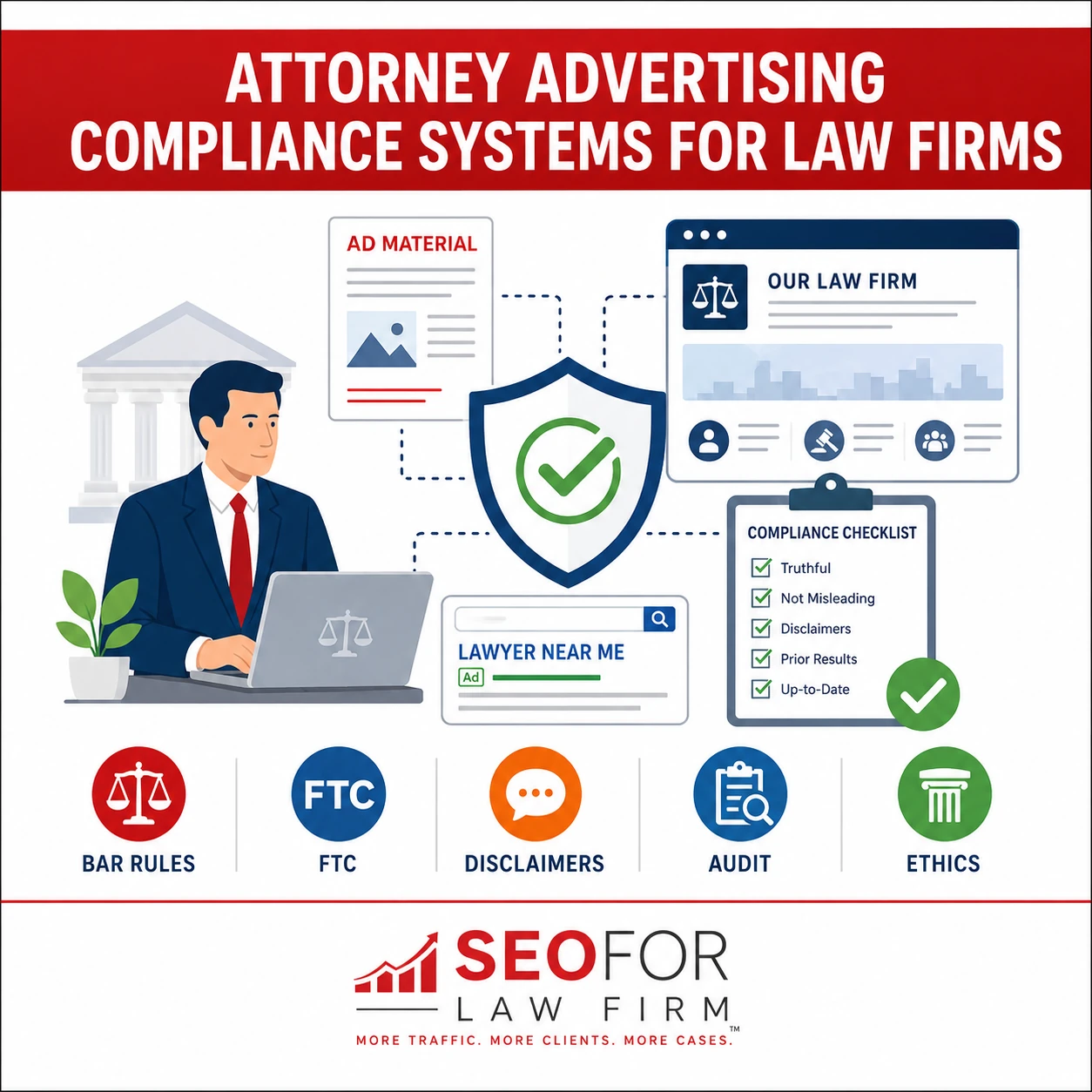
One Review System Across Your Marketing Channels
The Role of Advertising Compliance in Legal Marketing
Attorney advertising compliance helps law firms reduce marketing risk by reviewing claims, disclosures, testimonials, credentials, comparisons, results language, and jurisdiction-specific requirements before publication.
A documented compliance process also gives internal teams and outside vendors clearer rules for producing persuasive legal marketing without relying on unsupported promises or ambiguous review standards.

Reduce Regulatory Exposure
Structured review helps identify claims, testimonials, disclosures, or representations that warrant revision or attorney review.
Standardize Marketing Review
Clear checklists and approval criteria reduce inconsistent decisions between attorneys, marketers, intake teams, and vendors.
Preserve Client Trust
Accurate credentials, qualified case-result language, visible disclosures, and factual messaging support a more credible client experience.
SEOForLawFirm’s Advertising Compliance Engineering Model
The review system moves from risk discovery into policy mapping, controlled pre-publication review, documentation, escalation, and recurring monitoring.

Comprehensive Compliance Audit
Review websites, ads, social content, email, testimonials, case results, attorney biographies, awards, directories, and campaign materials.
Policy Alignment
Convert governing standards and firm-specific requirements into practical review rules, disclosure requirements, escalation points, and internal documentation.
Pre-Publication Protocol
Establish an approval workflow showing what can be published, what needs qualification, and what should receive responsible-attorney or legal review.
Continuous Risk Monitoring
Reassess active campaigns, high-traffic pages, new marketing formats, changing jurisdictional rules, and vendor-created assets on a recurring schedule.
Legal Risk Analysis & Advertising Oversight
Advertising-risk analysis identifies statements and presentation choices that may create avoidable regulatory or reputational exposure.
Reviews can cover case outcomes, settlement figures, testimonials, comparisons, guarantees, “best” claims, attorney credentials, certifications, awards, urgency language, past results, client expectations, and required disclosures.
Each finding is documented so the marketing team can see why a statement was flagged, what evidence supports it, how it can be rewritten, and whether further legal review is appropriate.
- Outcome and settlement claims
- Testimonials and endorsements
- Comparative advertising
- Awards and credentials
- Guarantee-style language

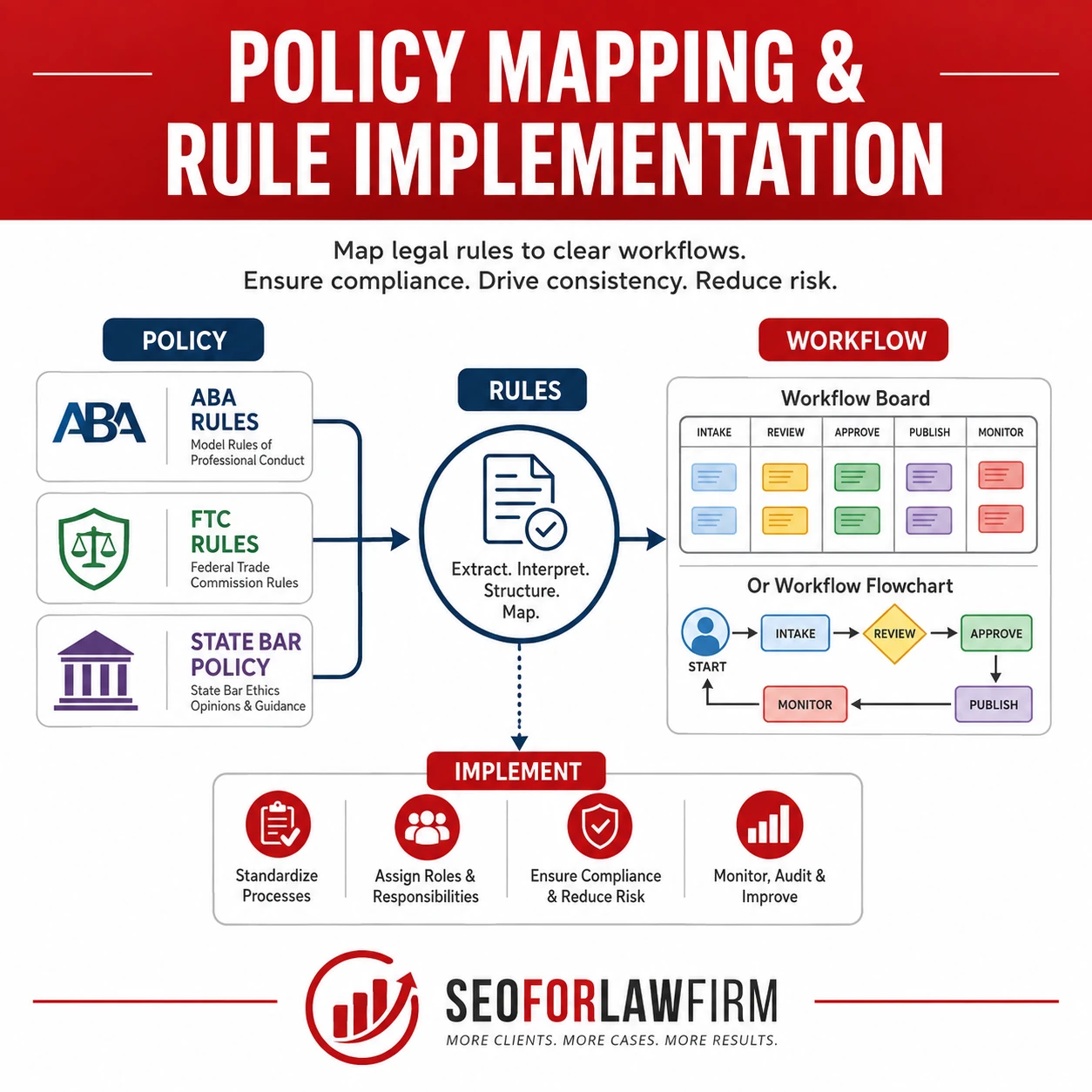
Policy Mapping & Rule Implementation
SEOForLawFirm converts advertising requirements into repeatable marketing controls instead of leaving teams to interpret rules separately for every campaign.
Policy maps can define permitted claims, restricted language, testimonial requirements, case-result qualifications, disclaimer placement, attorney attribution, required records, escalation triggers, and channel-specific review procedures.
State-specific requirements are maintained separately where the firm markets across multiple jurisdictions.
Pre-Launch Compliance Verification
Pre-launch verification inserts a documented review checkpoint between marketing production and publication.
The workflow can require marketers to submit the final asset, source documentation, testimonial consent, case-result support, disclaimers, targeting details, and jurisdiction before a responsible reviewer clears the campaign.
Pre-approval obligations vary by state and advertising format, so the workflow identifies materials that require jurisdiction-specific review rather than assuming one national approval rule.

Ongoing Monitoring & Ethics Adaptation
Advertising governance needs recurring review because campaigns, platforms, claims, personnel, vendors, and jurisdictional requirements change over time.
SEOForLawFirm can monitor active assets, schedule quarterly audits, document rule changes, update review templates, flag outdated disclaimer language, and refresh internal training materials.
Firms remain responsible for obtaining qualified legal advice regarding specific advertising obligations in each jurisdiction.

Practice-Area-Specific Compliance Frameworks
Advertising language changes according to the legal matter, audience sensitivity, type of result being discussed, client expectations, and jurisdictional restrictions.
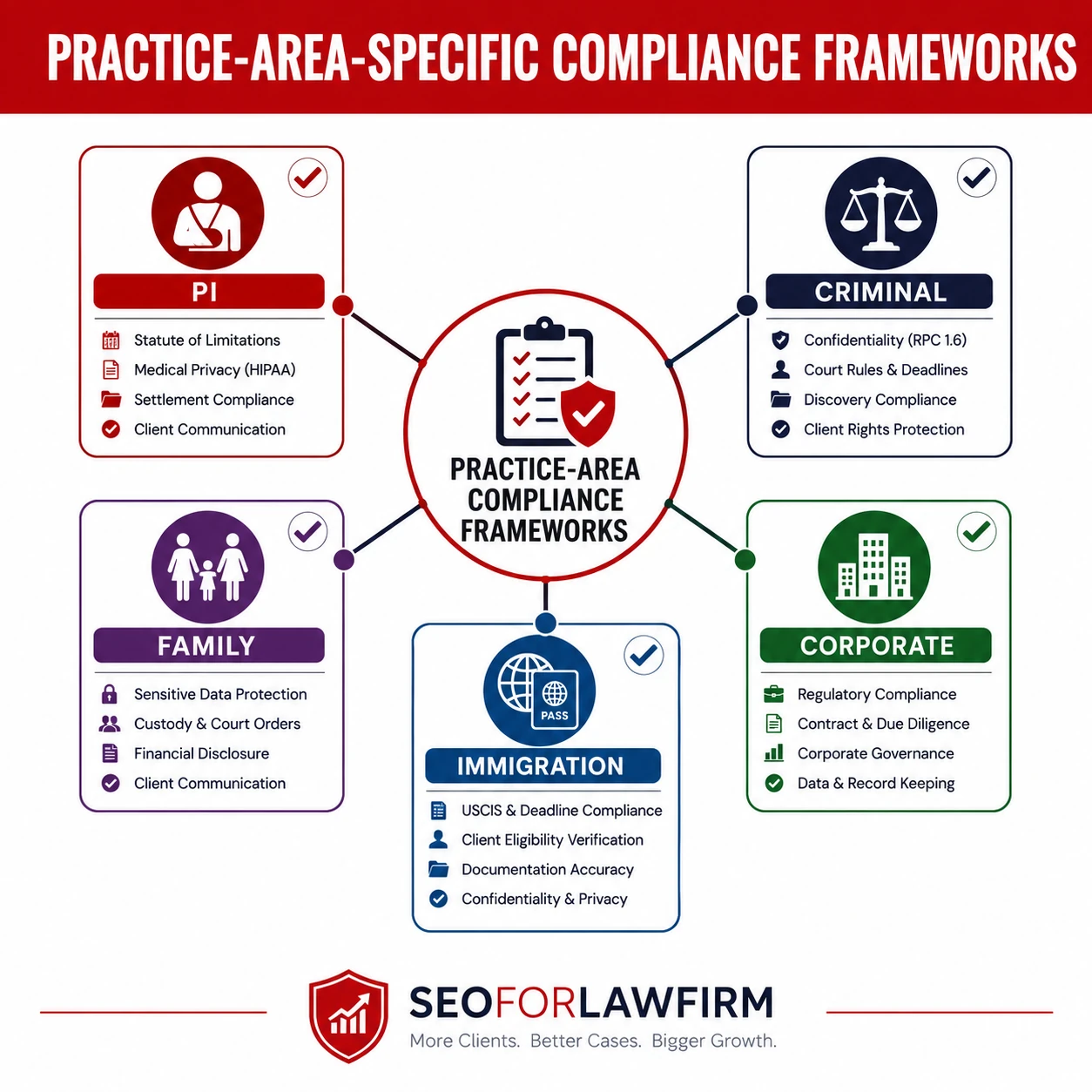
Personal Injury
Review settlements, verdicts, medical references, testimonial language, result disclaimers, comparative claims, and outcome expectations.
Criminal Defense
Review urgency, fear-based messaging, guarantees, dismissal language, comparative claims, experience claims, and representations about likely outcomes.
Family Law
Review emotionally sensitive messaging, custody representations, divorce outcomes, confidentiality, testimonials, and high-conflict content.
Corporate & Business
Review service-scope descriptions, transaction experience, representative matters, industry claims, awards, credentials, and client references.
Immigration
Review federal-process claims, expected outcomes, timelines, credentials, jurisdictional language, guarantees, and multilingual advertising.
Governing Bodies and Ethical Standards
Advertising review should account for the professional-conduct and consumer-protection standards that apply to the firm, its jurisdiction, its message, and its marketing channel.
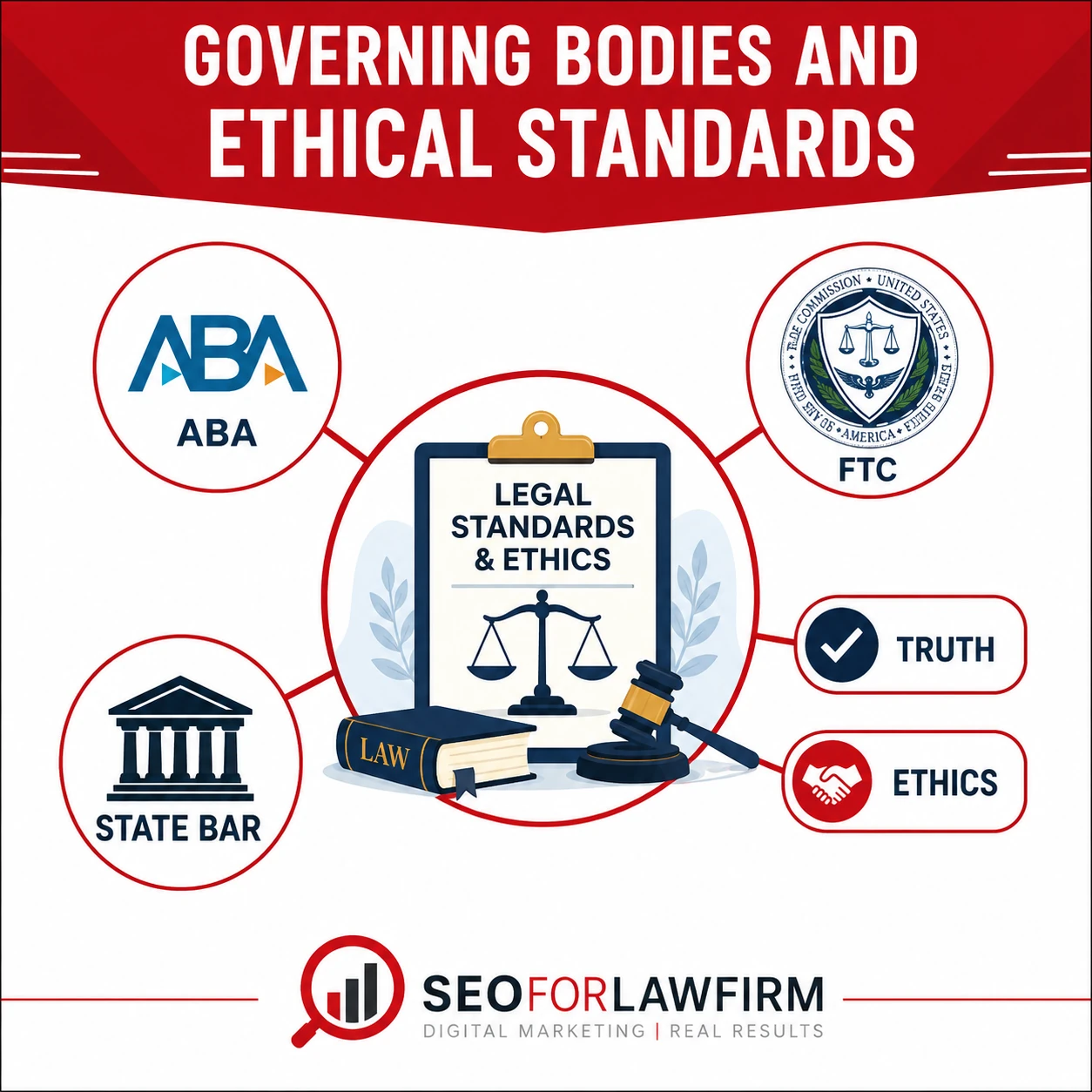
ABA Model Rules
Model rules provide widely used professional-conduct frameworks addressing attorney communications, solicitation, truthful advertising, and related ethical duties.
FTC Advertising Principles
Consumer-protection standards reinforce the need for truthful, non-deceptive advertising and adequate support for objective claims.
State Bar Requirements
State rules can impose distinct requirements for testimonials, case results, disclaimers, trade names, specialization claims, filing, retention, or review.
Advertising requirements vary materially by jurisdiction. This service supports marketing governance and review workflows; it does not replace advice from ethics counsel, bar counsel, or the responsible attorney.
Advertising Ethics Best Practices for Law Firms
Effective compliance systems give every person involved in marketing a repeatable method for verifying claims before publication.
- Verify testimonials and document appropriate client consent.
- Use factual, supportable language rather than unsupported superlatives.
- Apply required disclaimers in visible, channel-appropriate formats.
- Publish case results only when the underlying facts and required qualifications can be documented.
- Maintain responsible-attorney, firm, and address information where required.
- Review active marketing periodically for regulatory and factual changes.
- Train employees and outside vendors on the same approval procedures.

Common Compliance Mistakes in Legal Advertising
Small review failures can create larger governance problems when the same language is reused across ads, websites, directories, social platforms, and third-party campaigns.
Unverifiable Claims
Performance, superiority, experience, award, or outcome claims may require supporting documentation or qualification.
Missing Disclaimers
Required qualifications can become ineffective when omitted, hidden, outdated, or disconnected from the statement they qualify.
Result Language Without Context
Case results can create misleading expectations when factual context, required disclosures, or outcome limitations are absent.
Uncontrolled Vendor Publishing
Agencies, freelancers, intake vendors, and directory providers can create inconsistent claims when no common approval system exists.
Jurisdiction Blind Spots
A statement acceptable in one market may require different treatment, disclosure, filing, or review in another jurisdiction.
Selected Attorney Advertising Compliance Outcomes
Marketing Assets Reviewed
- 34 potentially problematic claims flagged
- 18 landing-page disclaimers standardized
- Internal review time decreased 46%
- 100% documented review for new paid campaigns
Average Revision Rounds
- 74 advertisements audited
- 29 higher-risk claims revised
- 21 campaign assets received disclaimer language
- Campaign approval delays decreased 41%
Fewer Undocumented Approvals
- 9 marketing channels assessed
- 83 webpages and attorney profiles reviewed
- 27-point compliance checklist created
- 4 outside vendors moved into one workflow
Law Firm Compliance Consulting Client Results
Reviewed the firm’s website, PPC landing pages, social ads, testimonials, settlement-result language, and disclaimers to reduce advertising-rule risk before campaign expansion.
“Our marketing team was producing more content and paid campaigns, but we did not have a consistent process for reviewing advertising claims before publication. The consulting engagement created a structured review system for testimonials, case results, attorney credentials, guarantees, disclaimers, and jurisdiction-specific messaging. Our team gained a much clearer standard for what could be published, what needed qualification, and what required legal review before launch.”
- Reviewed 126 marketing assets across web, PPC, email, and social channels
- Flagged 34 potentially problematic claims for revision
- Standardized disclaimers across 18 high-traffic landing pages
- Reduced average internal compliance-review time by 46%
- Created 11 reusable advertising-review templates
- Achieved 100% documented pre-publication review for new paid campaigns during the reporting period
Reworked aggressive criminal-defense advertising language involving guarantees, comparative claims, urgency messaging, testimonials, and attorney experience.
“Our ads were written to convert quickly, but some of the language was too aggressive for a regulated legal-services environment. The consulting process reviewed our campaigns line by line, identified statements that could create compliance concerns, and replaced them with language that still communicated urgency and experience without implying guaranteed outcomes. We kept the persuasive strength of the campaigns while creating a much safer approval process.”
- Audited 74 active and proposed advertisements
- Revised 29 high-risk or ambiguous advertising claims
- Added compliant disclaimer language to 21 campaign assets
- Reduced ad-revision cycles from an average of 3.4 to 1.8 rounds
- Trained 7 marketing and intake team members on advertising-review procedures
- Cut campaign approval delays by 41%
Built an internal advertising governance framework covering attorney bios, awards, testimonials, directory profiles, email campaigns, social media, service pages, and third-party marketing vendors.
“Our firm had grown to the point where multiple employees and vendors were publishing legal marketing content. That created inconsistency in how claims, awards, testimonials, and disclaimers were handled. The consulting project gave us a documented approval framework, clear escalation rules, and a repeatable checklist that every marketing partner could follow. We now have much stronger control over what gets published under the firm’s name.”
- Assessed 9 marketing channels for advertising-risk exposure
- Reviewed 83 webpages and attorney profiles
- Standardized disclosure language across 6 external directory platforms
- Created a 27-point advertising compliance checklist
- Reduced undocumented marketing approvals by 89%
- Brought 4 outside marketing vendors into the same review and documentation workflow
Attorney Advertising Compliance Deliverables
Frequently Asked Questions About Attorney Advertising Compliance
What is advertising compliance for law firms?
Attorney advertising compliance is the process of reviewing law-firm marketing against applicable professional-conduct, consumer-protection, disclosure, testimonial, solicitation, and advertising requirements before or after publication.
What marketing materials should receive compliance review?
Websites, landing pages, PPC ads, social campaigns, email, testimonials, case results, attorney biographies, awards, directories, videos, print materials, and third-party campaigns can all warrant review depending on the jurisdiction and content.
What ads require pre-approval?
Pre-approval, filing, retention, or review requirements vary by jurisdiction and advertisement type. Firms should confirm the applicable state rules and route regulated materials through the responsible attorney or qualified ethics counsel when needed.
How often should advertising compliance reviews occur?
Quarterly review provides a useful recurring governance cycle, with separate review before material campaign launches, new claims, new jurisdictions, new testimonial use, or substantial changes to high-visibility marketing assets.
What are common attorney advertising compliance problems?
Common risk areas include unsupported guarantees, unverifiable results, misleading comparisons, inadequate disclaimers, inaccurate credentials, testimonial issues, missing attribution, inconsistent vendor practices, and jurisdiction-specific rule gaps.
Does SEOForLawFirm provide staff training?
Yes. Training can cover review checklists, claims verification, testimonial procedures, disclaimer use, documentation, escalation rules, approval records, vendor controls, and recurring compliance workflows.
Does a compliance system guarantee that advertising is legally compliant?
No. A structured system reduces process gaps and improves documentation, but advertising obligations vary by jurisdiction and facts. Final legal responsibility remains with the law firm and appropriate legal or ethics counsel.
Can outside marketing vendors use the same review system?
Yes. Agencies, freelancers, intake vendors, directory providers, media buyers, and other partners can be brought into one documented submission, review, escalation, approval, and recordkeeping workflow.
Lets make you an extra +$10M in Revenue
Build a documented advertising-review system around factual claims, testimonials, case results, disclaimers, attorney credentials, vendor publishing, jurisdiction-specific requirements, approval records, recurring audits, and team training.
Governing Bodies and Ethical Standards
Advertising review should account for the professional-conduct and consumer-protection standards that apply to the firm, its jurisdiction, its message, and its marketing channel.
ABA Model Rules
Model rules provide widely used professional-conduct frameworks addressing attorney communications, solicitation, truthful advertising, and related ethical duties.
FTC Advertising Principles
Consumer-protection standards reinforce the need for truthful, non-deceptive advertising and adequate support for objective claims.
State Bar Requirements
State rules can impose distinct requirements for testimonials, case results, disclaimers, trade names, specialization claims, filing, retention, or review.
Advertising requirements vary materially by jurisdiction. This service supports marketing governance and review workflows; it does not replace advice from ethics counsel, bar counsel, or the responsible attorney.