
Technical SEO for Lawyers
Find the Technical Barriers on Your Priority Legal Pages
Technical SEO & Site Audits — defined scope, implementation, and reporting.
SEOForLawFirm audits crawl access, indexation, speed, redirects, internal links, and structured data on law firm websites. The output is a prioritized issue register: affected URLs, evidence, implementation responsibility, and a test for each fix.
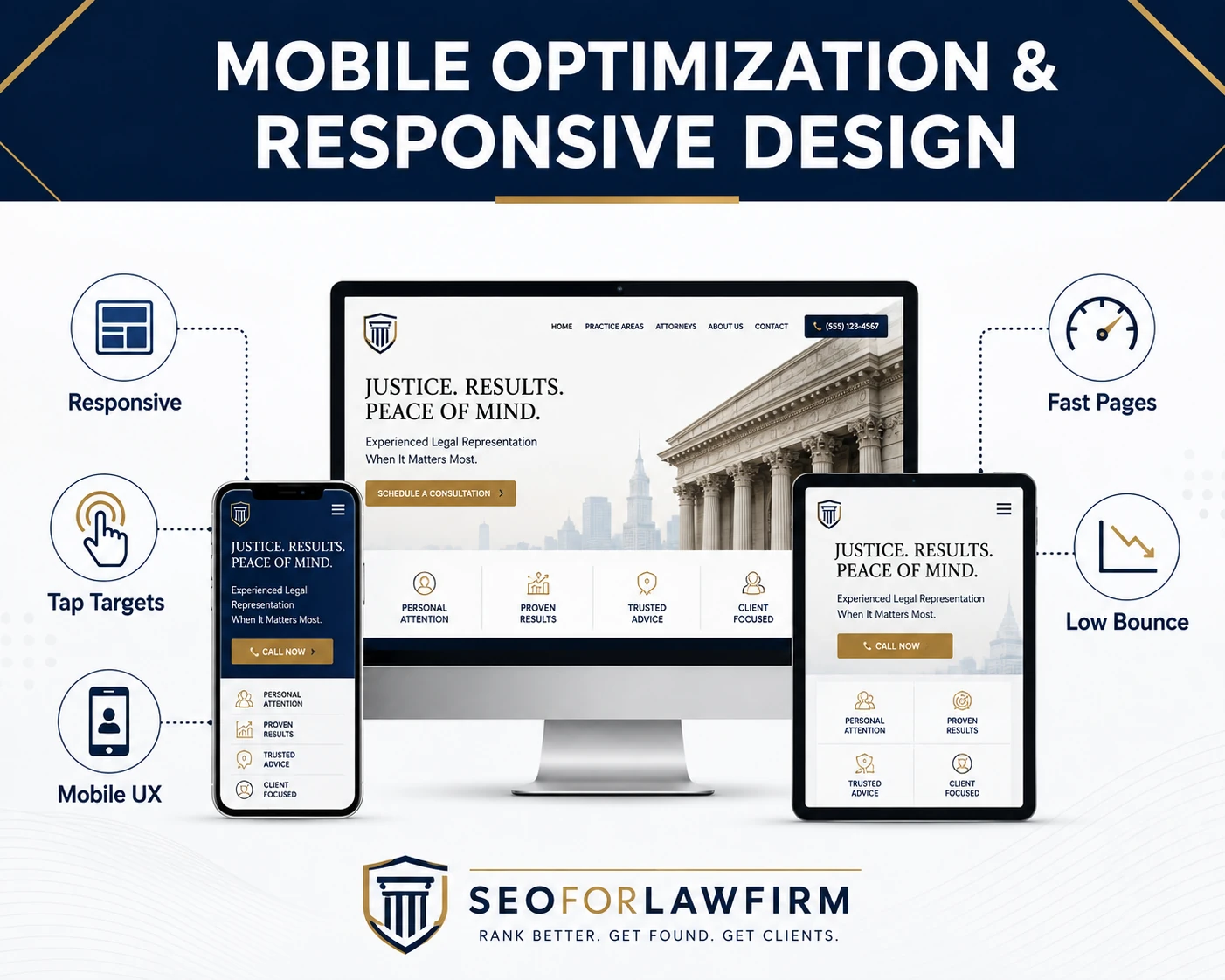
Strategy & Execution
Why Technical Problems Need URL-Level Evidence
A legal website can publish useful content while an unintended indexing directive, broken link, or slow template prevents readers and search systems from reaching it. SEOForLawFirm examines the pages tied to accepted matters and real offices before recommending changes across the site.
- Record the URL inventory, access, template behavior, and available Search Console evidence.
- Identify technical problems on important practice, office, and attorney pages.
- Retest affected pages and distinguish completed fixes from later search outcomes.

A Connected System
Technical SEO & Site Audits Framework
Four stages connect the initial evidence, implementation responsibilities, and ongoing review.
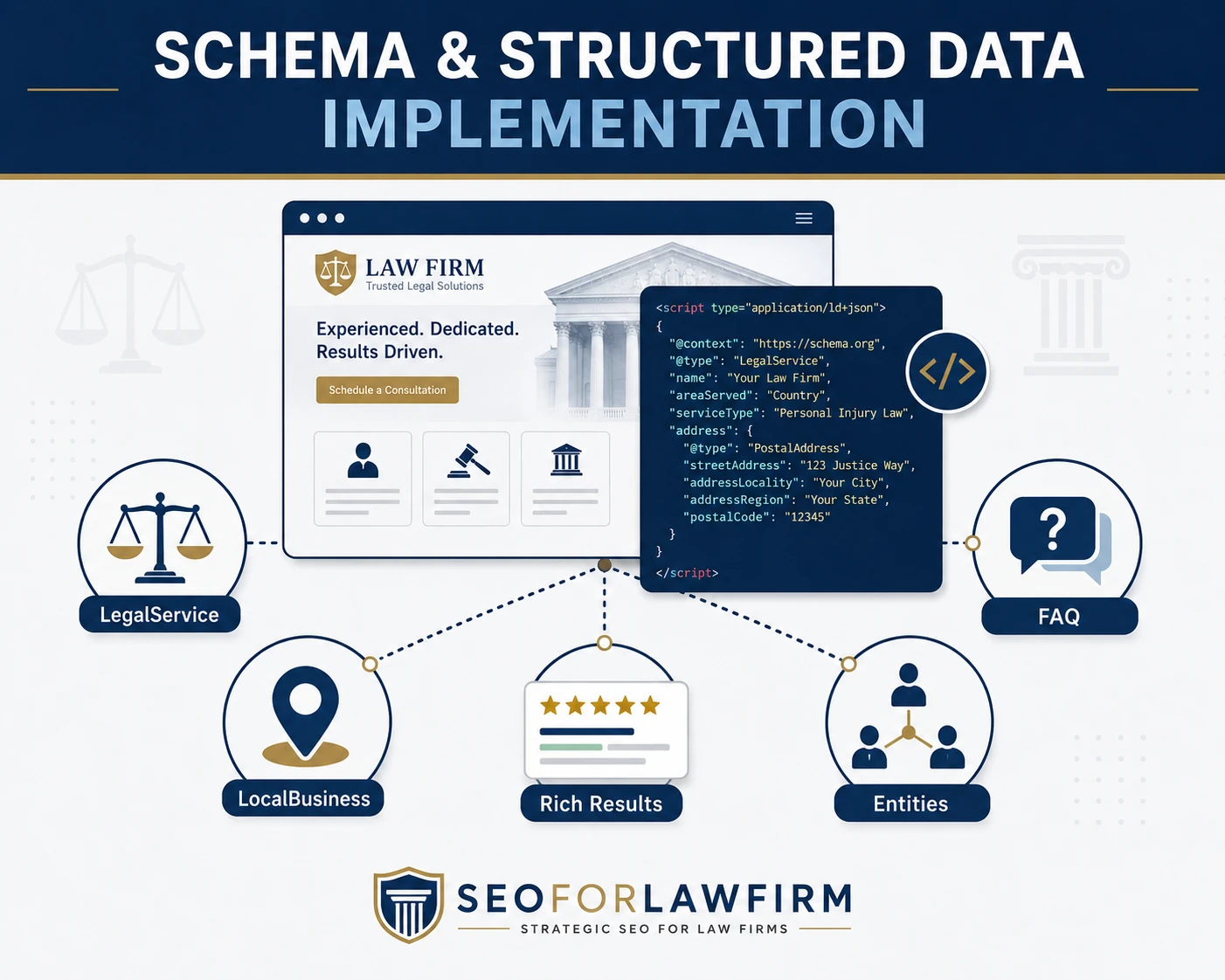
Capture the Baseline
Record the URL inventory, access, template behavior, and available Search Console evidence.
Prioritize Affected Pages
Identify technical problems on important practice, office, and attorney pages.
Implement Controlled Fixes
Assign responsibilities, preserve useful URLs, and verify changes before broad release.
Verify and Monitor
Retest affected pages and distinguish completed fixes from later search outcomes.
Core Services
What the Engagement Covers
Six service components are scoped around the firm’s existing website, accounts, and intake workflow.
Technical Audit and Issue Register
Affected URL inventory; evidence and severity; owner and verification method.
Website Speed and Template Performance
Representative templates; image and script priorities; comparable retesting.
Structured Data and Page Relationships
Visible-fact alignment; validation results; attorney and office relationships.
Broken Links, Redirects, and URL Changes
Link and redirect register; relevant destination mapping; migration verification.
Mobile Forms and Consultation Paths
Readable mobile templates; contact-path checks; form delivery verification.
Crawl Access and Indexation Review
Directive and canonical checks; search console evidence; sitemap and internal discovery.
Strategy & Execution
Technical Audit and Issue Register
The audit joins crawl findings with available Search Console evidence and a review of key templates. Each issue names the affected URLs, why it matters, its priority, and the person responsible for implementation. A site-wide warning is separated from a verified problem on a revenue-relevant page.
- Affected URL inventory
- Evidence and severity
- Owner and verification method
Strategy & Execution
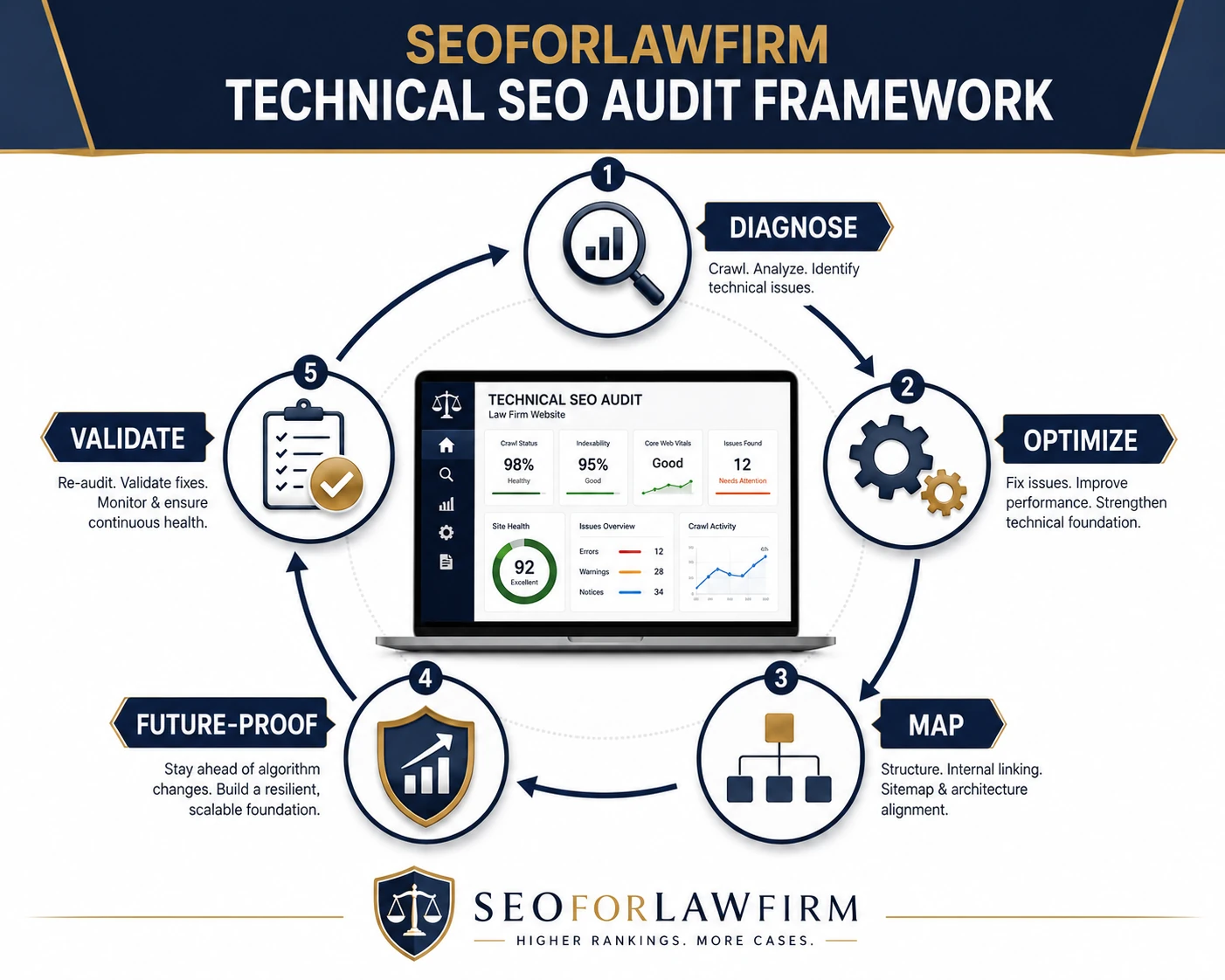
Website Speed and Template Performance
SEOForLawFirm reviews image weight, scripts, fonts, rendering behavior, and server response on representative legal page templates. Recommendations address the shared causes before repeating the same fix on every page. Before-and-after tests use comparable conditions; lab measurements and available field data are reported separately.
- Representative templates
- Image and script priorities
- Comparable retesting
Strategy & Execution
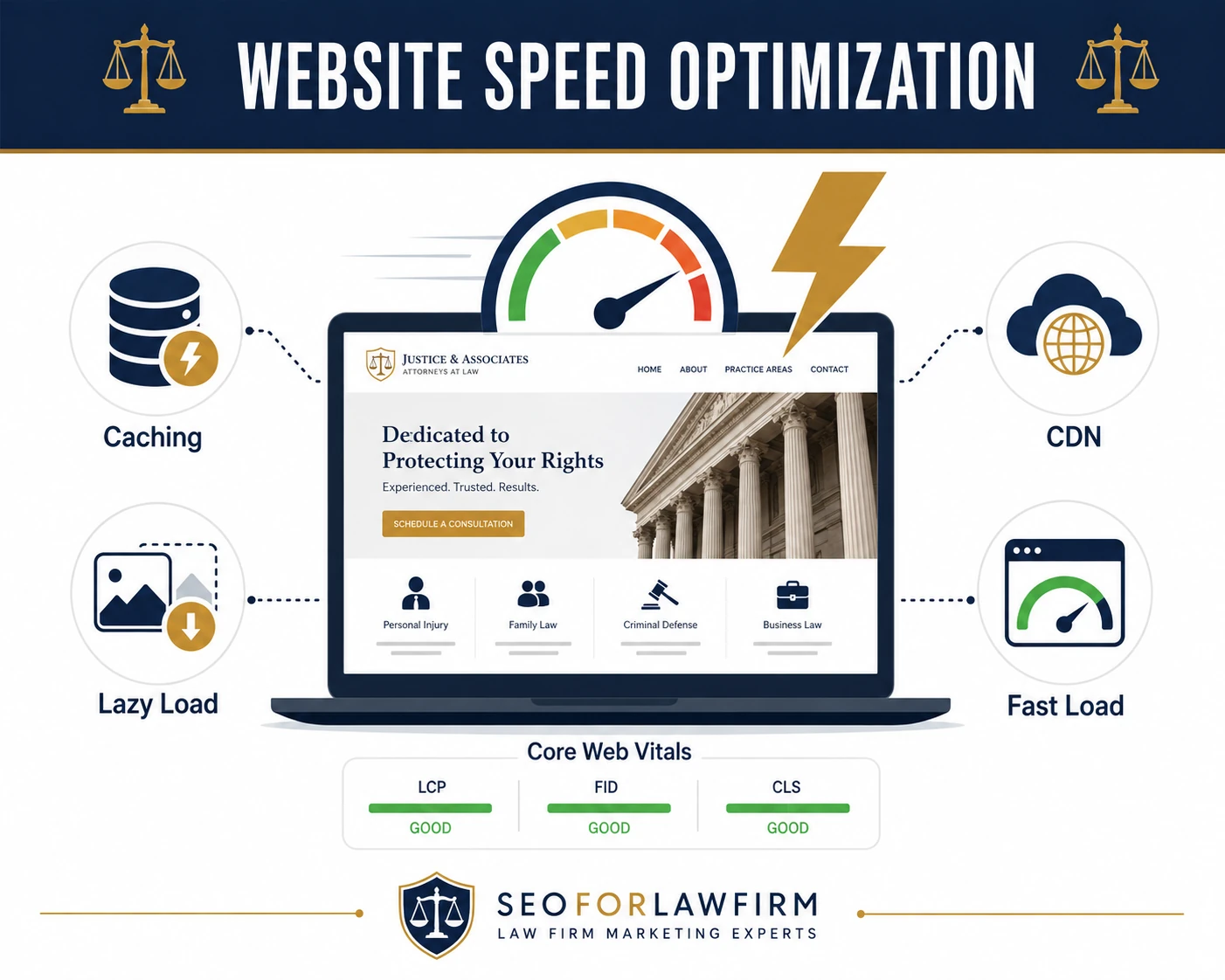
Structured Data and Page Relationships
What this work includes
SEOForLawFirm checks whether markup agrees with visible attorney, firm, service, and office facts. Validation errors and inconsistencies receive specific correction tasks. Structured data cannot replace useful page content or establish credentials the firm has not supplied.
- Visible-fact alignment
- Validation results
- Attorney and office relationships

Strategy & Execution
Broken Links, Redirects, and URL Changes
What this work includes
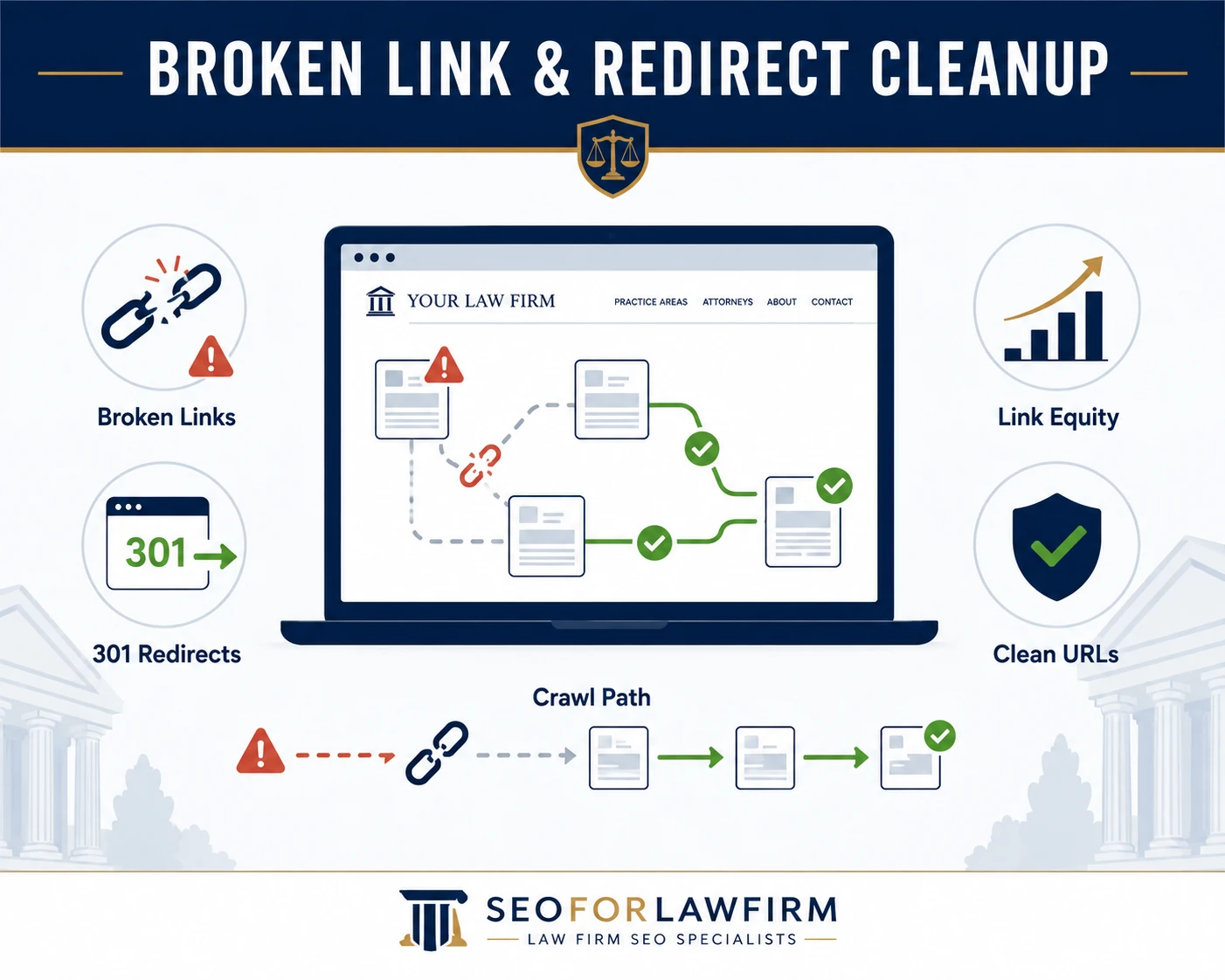
SEOForLawFirm traces internal links to broken pages and redirects, identifies chains, and recommends destination URLs. A relocation or consolidation includes an old-to-new URL map and checks for important links, sitemaps, and contact routes. The plan avoids sending unrelated retired pages to the homepage.
- Link and redirect register
- Relevant destination mapping
- Migration verification
Strategy & Execution
Mobile Forms and Consultation Paths
SEOForLawFirm inspects navigation, tap-to-call links, form labels, validation, and layout behavior on the pages prospective clients use. Technical work is prioritized when it obstructs a consultation or makes service information hard to read. Form delivery is checked with the firm’s agreed testing procedure.
- Readable mobile templates
- Contact-path checks
- Form delivery verification

Strategy & Execution
Crawl Access and Indexation Review
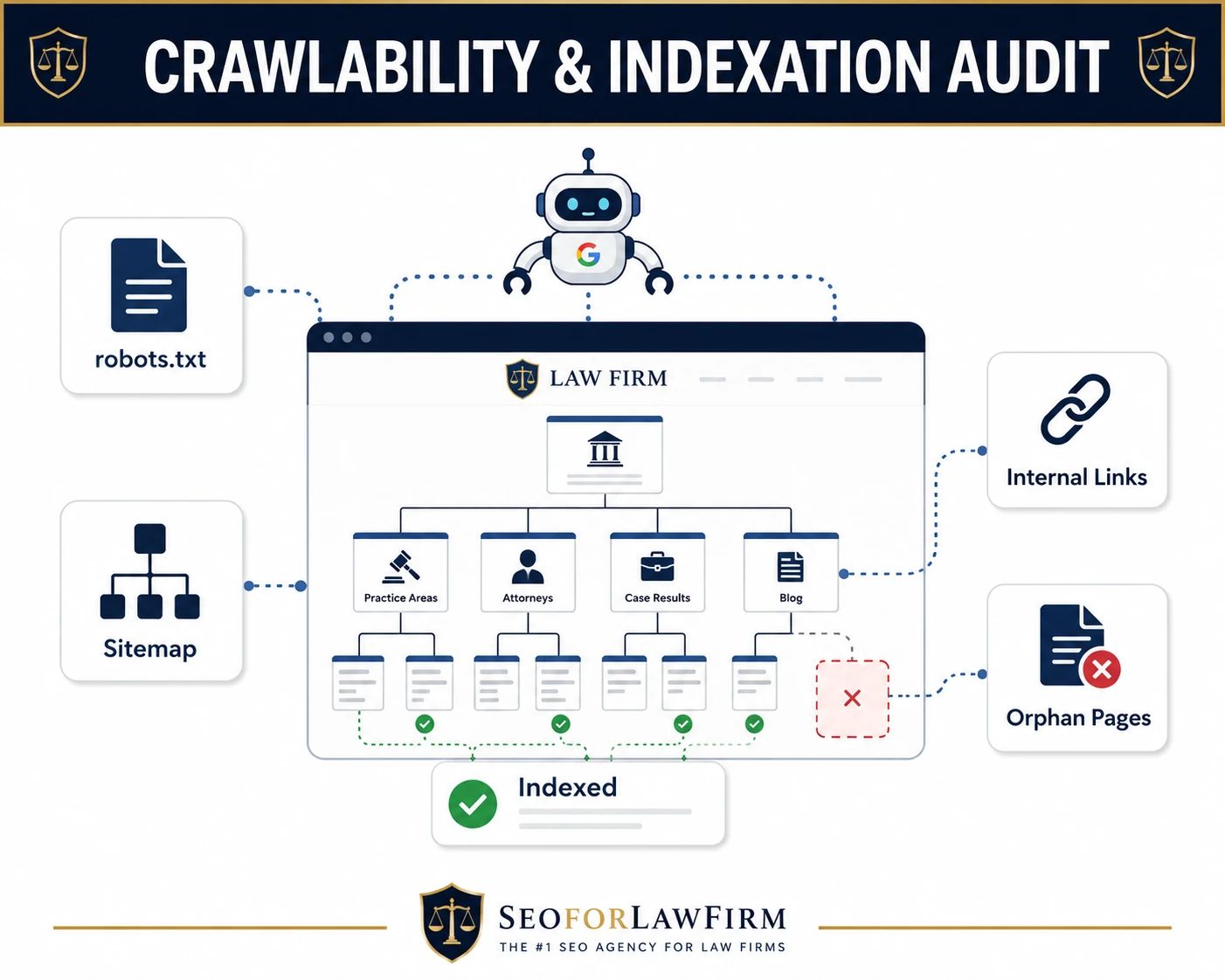
SEOForLawFirm examines response codes, robots directives, canonical URLs, sitemaps, and internal discovery. Search Console evidence helps distinguish blocked pages from pages Google has chosen not to index. Meeting technical requirements makes a page eligible; indexing is not guaranteed.
Technical eligibility and indexing context: Google Search Central, reviewed October 10, 2026.
- Directive and canonical checks
- Search Console evidence
- Sitemap and internal discovery
SEOForLawFirm’s Process
From Audit to Continuous Improvement
Capture the Baseline
Record the URL inventory, access, template behavior, and available Search Console evidence.
Agree Scope and Owners
Document access, included tasks, dependencies, and firm-side approvals.
Prioritize Affected Pages
Identify technical problems on important practice, office, and attorney pages.
Quality Checks
Test the implemented work against the agreed verification steps.
Implement Controlled Fixes
Assign responsibilities, preserve useful URLs, and verify changes before broad release.
Verify and Monitor
Retest affected pages and distinguish completed fixes from later search outcomes.
Common Problems
Mistakes That Restrict Performance
Blanket Fixes Without Evidence
Changing every page can hide the template or URL that caused the problem.
Conflicting Indexing Signals
Robots directives, canonical targets, and sitemap entries need a coherent purpose.
Redirects to Irrelevant Pages
A redirect should lead to the closest useful replacement.
Only Testing the Homepage
Practice pages, forms, biographies, and office templates can fail differently.
Closed Tickets Without Retesting
A completed implementation task needs evidence that the affected issue is resolved.
Measured Outcomes
Outputs You Can Review
Your engagement produces a scoped work queue, implementation record, and reporting baseline. The retained illustrations explain service concepts; they are not proof of any named client’s campaign results.

Planning Examples
Illustrative Plans for Different Legal Practices
Personal Injury Site
Illustrative workflow — not a client testimonial
Planning example; no campaign results claimed.
Illustrative audit: inspect overlapping accident and city pages, canonical targets, and links to the correct case-review page.Workflow Outputs
- Accident-page inventory
- Duplicate-page decisions
- Contact-path tests
Immigration Site
Illustrative workflow — not a client testimonial
Planning example; no campaign results claimed.
Illustrative audit: review language-page relationships, old URLs, attorney facts, and the appointment journey.Workflow Outputs
- Language URL review
- Redirect mapping
- Appointment tests
Business Law Site
Illustrative workflow — not a client testimonial
Planning example; no campaign results claimed.
Illustrative audit: inspect navigation and internal links separating advisory work from litigation services.Workflow Outputs
- Service architecture
- Orphan-page review
- Template checks
Practice-Area Experience
Built for the Legal Markets Your Firm Serves
Law Firm SEOBuild the firm-wide organic visibility foundation.Explore this practice area →Local SEO for LawyersCompete across maps, local results, and service areas.Explore this practice area →Personal InjuryReach injury prospects during high-intent searches.Explore this practice area →Criminal DefenseSupport urgent searches for local legal representation.Explore this practice area →Divorce & Family LawConnect family-law services with local client needs.Explore this practice area →Immigration LawOrganize visibility around immigration services and questions.Explore this practice area →Bankruptcy LawReach consumers researching debt-relief options and counsel.Explore this practice area →Employment LawTarget employee and employer-side legal search demand.Explore this practice area →Real Estate LawBuild visibility for transactional and dispute-related matters.Explore this practice area →Business LawSupport companies seeking transactional and advisory counsel.Explore this practice area →Estate PlanningReach families planning estates, trusts, and succession.Explore this practice area →DUI DefenseCompete for urgent, location-specific DUI defense searches.Explore this practice area →
Related Services
Build a More Complete Client-Acquisition System
Frequently Asked Questions
Law Firm Technical SEO & Site Audits FAQs
What does the technical audit deliver?
A prioritized issue register with affected URLs, evidence, recommended fixes, responsibilities, and verification steps.
Do you implement the fixes?
The proposal identifies which fixes SEOForLawFirm implements and which need your developer, host, or platform vendor. Access and dependencies are established first.
Can this preserve the firm’s photos and current design?
Yes. SEOForLawFirm begins with the existing site. Image performance and readability can be improved while keeping approved photos and the established design.
Will fixing an error guarantee indexing or rankings?
No. Technical eligibility does not guarantee indexing or rankings. SEOForLawFirm separates verified technical corrections from later search performance.
Can you help with a migration?
A migration can include a URL map, redirect and canonical review, sitemap checks, and testing of priority consultation paths.
How is progress reported?
The report separates discovered issues, implemented fixes, verified resolutions, unresolved dependencies, and available search evidence.
Build the Next Stage of Growth
Discuss Your Technical SEO & Site Audits Priorities
Share your priority practices, current systems, and the issues your team wants to resolve. SEOForLawFirm will discuss the evidence to review, implementation dependencies, and a defined proposal.